
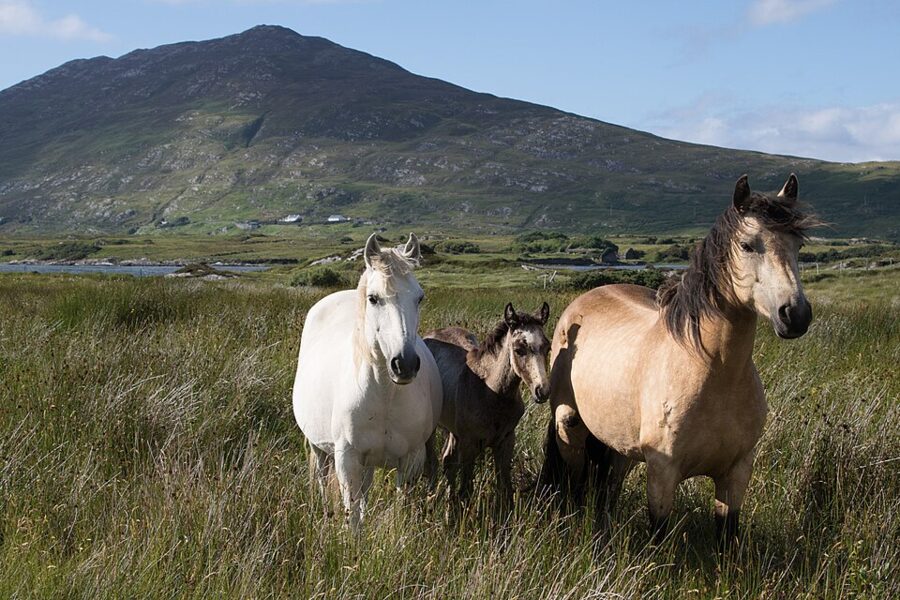

In June 1912 a 28-year-old vet from Ros Muc set off for London with two ponies on a halter: a four-year-old grey stallion called Irish Dragoon and a six-year-old cream mare called Eileen Alanna. The journey to Olympia, about 870 km on foot, by train and by boat, was to put them in a parade of British and continental horse and pony types. Michael O’Malley’s stated aim was to show as many people as possible “the best pony in the world”.
It took eleven more years, a world war and a revolution before the breeders of the west formed a society to protect that pony, and two more before the first studbook came off the press. A century on, the Connemara is bred in Australia, Finland and Indiana, jumps in Paris and Dublin, and sells out of a ring in Clifden (An Clochán) to buyers from three continents. It still grows up on the same bog and granite O’Malley led his two ponies away from.
In Irish the breed is capaillín Chonamara, the little horse of Connemara: capaillín is the diminutive of capall, a horse, and the breeders’ society calls itself Cumann Lucht Capaillíní Chonamara. The region’s own name goes back to the Conmhaicne Mara, the branch of the Conmhaicne people whose territory lay along the sea.
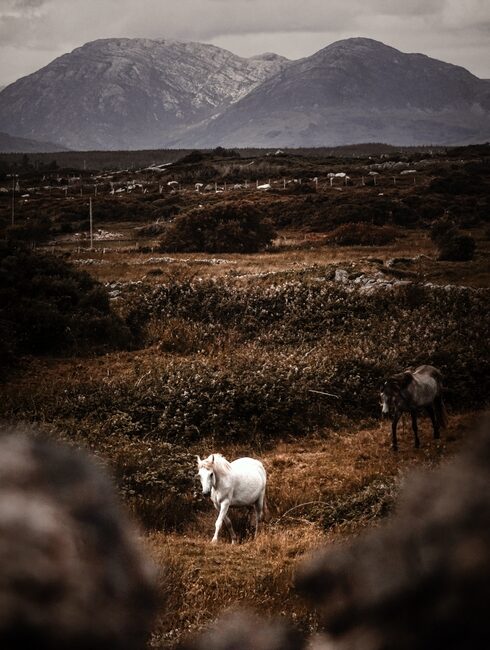
The pony that came out of that country is small, tough, clever with its feet and calm in its head, and those four things explain nearly everything that follows: why farmers kept one, why the society was formed, why riders abroad pay serious money for one now. If you want to see the breed at its best, come to Clifden in the third week of August. If you are here any other week, walk the short loop past the pony paddock in the national park and then drive the coast road to Roundstone (Cloch na Rón), where the ponies stand in the fields beside the road.

On this page8 sections
What a Connemara is
The breed standard, kept by the Connemara Pony Breeders’ Society in Clifden and used by the daughter societies abroad, sets the height at 128–148 cm, which horse people write as 12.2–14.2 hands. In plain words it asks for a compact, well-balanced riding pony with depth through the chest, a strong back and quarters, a sloping shoulder, short legs with hard, medium-sized feet, and a free, easy stride that covers the ground without high knee action. The head should be a pony’s head: broad between large, kind eyes, with short ears.
The temperament is written into the standard too. A Connemara is meant to be intelligent and good-natured enough for a child to handle, hardy, sound, sure-footed, and able to jump. That last clause matters more than it looks, because it is the one that turned a farm animal into a sport pony.
Colours, and why so many are grey
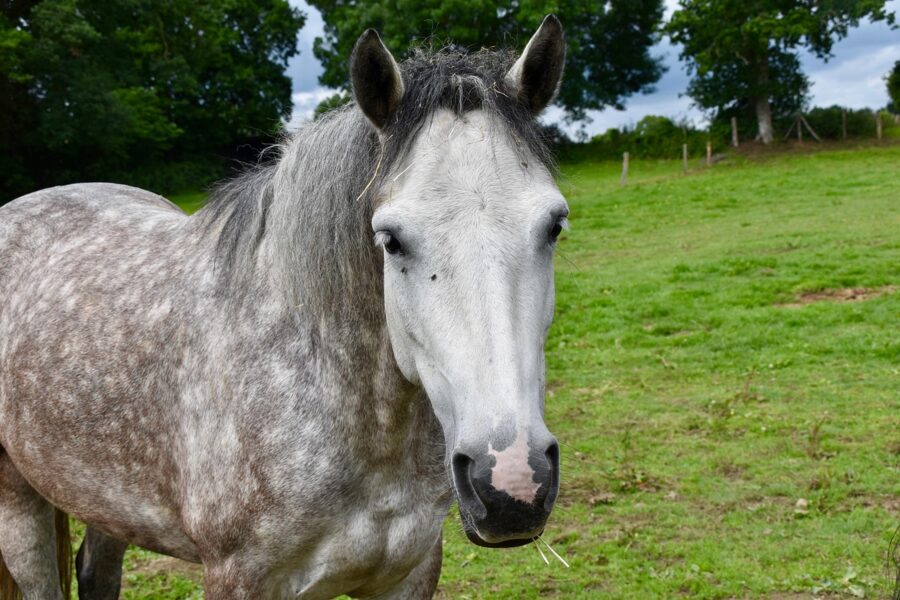
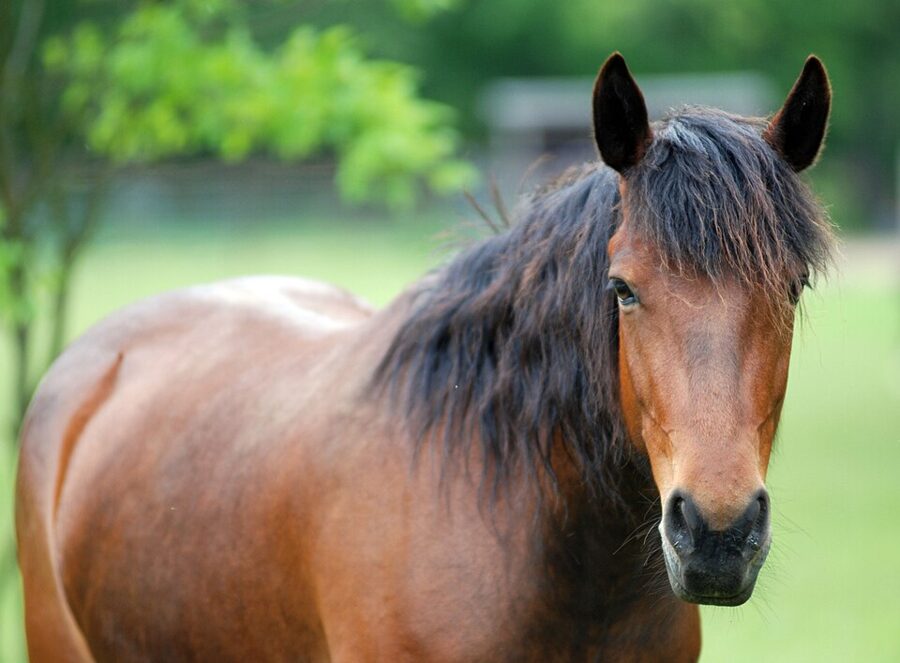
Permitted colours are grey, black, brown, bay, dun, roan, chestnut, palomino and cream. Piebald and skewbald patches are not accepted, which is the quickest way to tell a Connemara from the coloured cobs you will see at a fair. Grey dominates, and most greys are born dark and lighten year by year until an old pony is nearly white.
The greying comes from a duplication in a gene called syntaxin 17, and work published in 2024 showed that it comes in two versions. A pony carrying the three-copy version, G3, greys fast and has a far higher risk of melanoma; the two-copy G2 greys slowly and carries little extra risk. The society is backing an international study of early melanoma in grey Connemaras under six years old, aiming at a DNA test that lets breeders keep the grey coat while lowering the risk.

Built for poor grazing
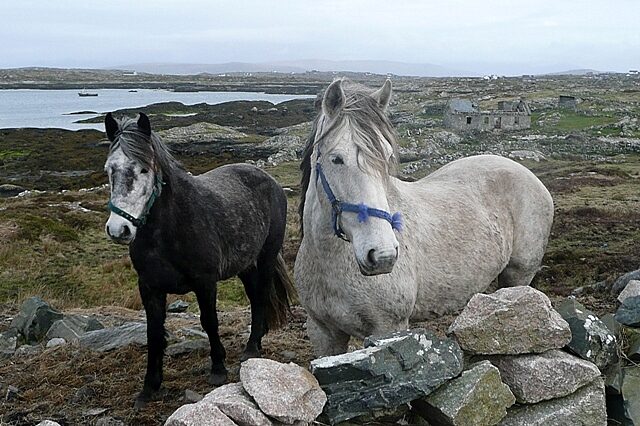
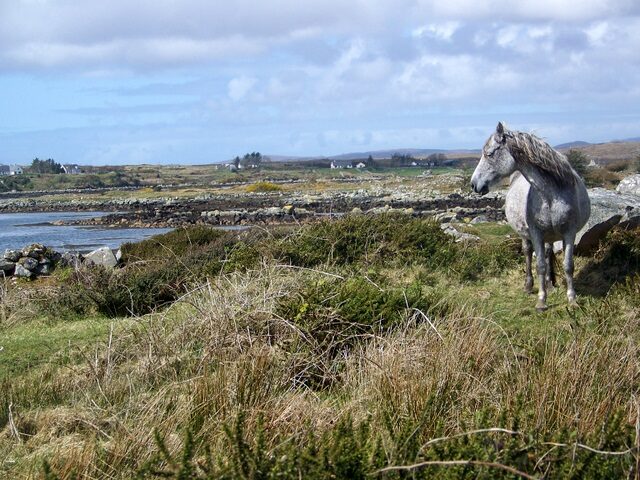
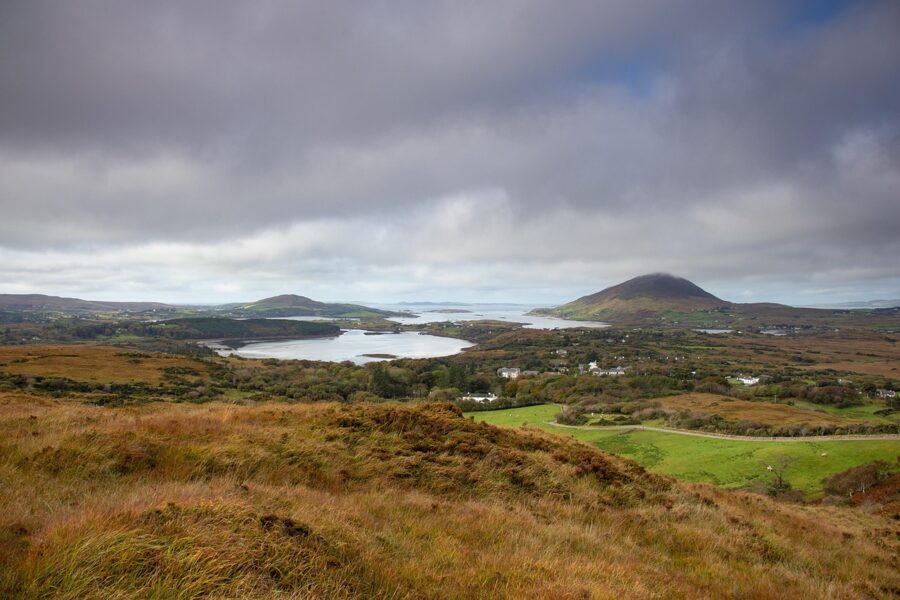
Connemara is granite in the south, quartzite in the Twelve Bens (Na Beanna Beola) and blanket bog between them, with thin acid soil over all of it. Grass is scarce, the wind comes straight off the Atlantic and the rain is a given. A pony that thrived here had to live on rushes, bog plants, heather, coarse grass and, on the coast, seaweed, and stay sound on rock and soft ground. Many Connemaras, show ponies included, still live out all year.
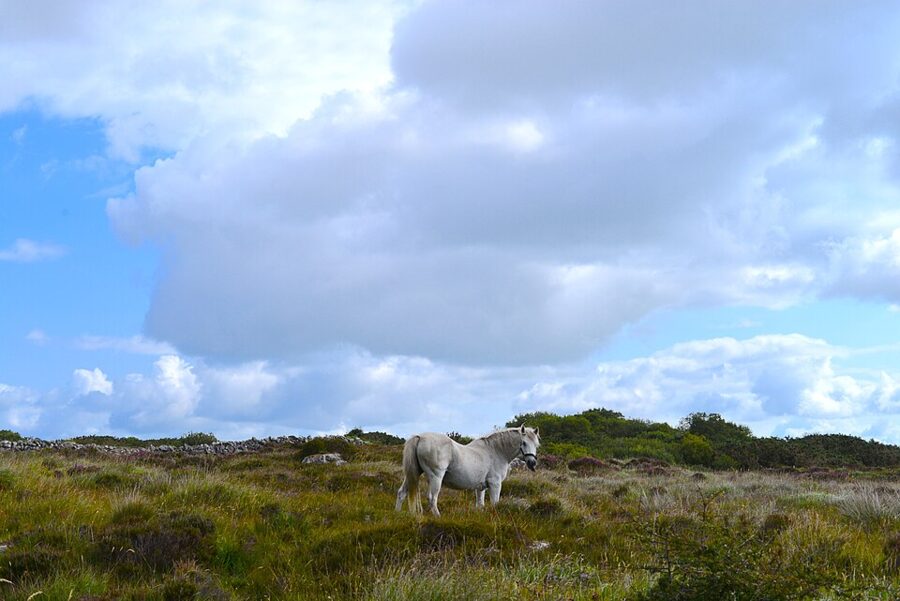

The flip side shows up on lowland grass. A 2024 study of 200 registered Connemaras in Ireland found 29.5% obese by body-condition score, hyperinsulinaemia confirmed in 16%, and a history or signs of chronic laminitis in 46%. The authors concluded that obesity, laminitis and metabolic disease are common in the breed. The thrift that keeps a pony alive on a Connemara hillside works against it in a rich paddock.
Where it came from: the stories and the evidence
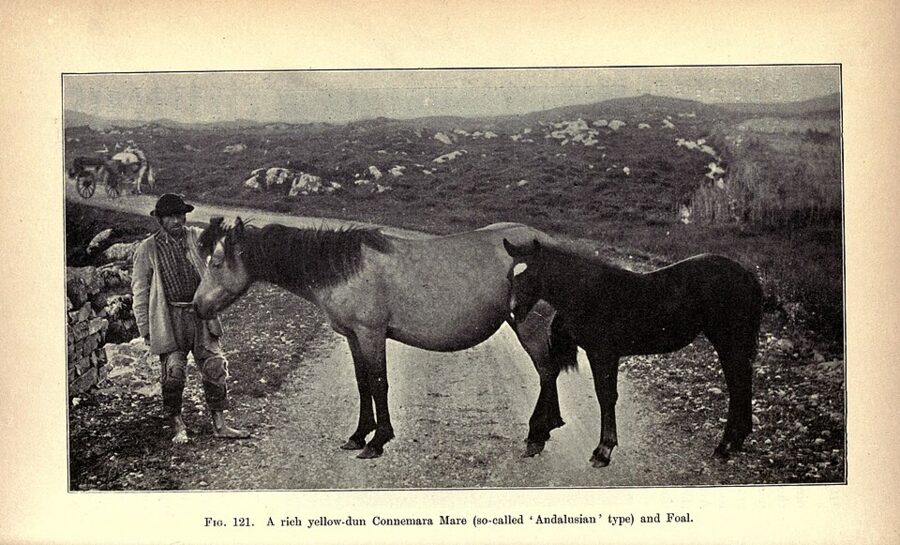
The origin story everyone knows is the Spanish Armada. In 1588 several galleons of the fleet were wrecked on the west coast, and the story has Andalusian horses swimming ashore and breeding with the local ponies, which is where the grace and the jump came from. It is a good story and should be told as one. The society’s own history starts with the native ponies and the crosses of the 1890s, not with the Armada.
There are older and likelier strands. Ponies were in Ireland long before 1588, and Norse settlers are often said to have brought small horses of the kind that became the Icelandic pony. The Irish Hobby, a light, fast horse bred in Ireland before the thirteenth century and now extinct, is another likely ancestor.
Trade with Spain goes back at least to the twelfth century, and Barb and Andalusian stallions are recorded coming in during the sixteenth; Arab and Thoroughbred blood is said to have followed from the eighteenth. Which of these mattered most is not something the paper record can settle.
What the genetics says
DNA has not found a Spanish galleon, but it has found a pony that is very much its own breed. A 2020 study of eleven British and Irish pony breeds, using 450 animals for nuclear markers and 485 for maternal lines, found that the Connemara forms a distinct cluster and carries the highest genetic diversity of any of them. One maternal lineage, labelled haplogroup B, turned up almost only in Connemaras. The closest maternal relative was the Highland pony of Scotland, and the Connemara was no more different from the British native breeds than they are from each other: centuries of ponies crossing the Irish Sea in both directions, in other words, with later Welsh, Arab and Thoroughbred blood on top.
A 2023 genomic study of Connemaras and Warmbloods found the ponies less inbred than the sport horses overall, but with more sign of recent inbreeding, and popular stallions weighing as heavily on the breed as they do in the sport horses. That is the modern worry: a breed with a wide old base, narrowing at the top.
The nineteenth century and the Congested Districts Board
The Famine broke the pony population along with everything else. Families who survived sold what they could, and the numbers and quality of ponies in the west fell hard. In 1891 the British government set up the Congested Districts Board to improve life on the western seaboard, and part of its brief was better livestock. It sent stallions of many kinds into Connemara: Arabs, Barbs, Thoroughbreds, Hackneys and Welsh Cobs.
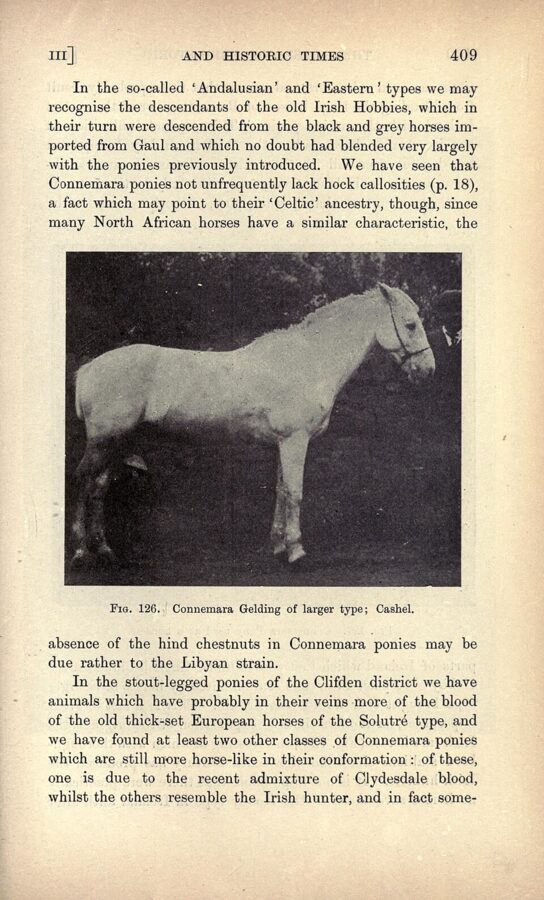
The results were mixed at best. The society’s own history says many of the Board’s stallions were “very unsuitable” for crossing with Connemara mares, and much of what they sired was too fine to winter out on a hillside. Around the turn of the century Professor James Cossar Ewart of Edinburgh University, the zoologist known for his breeding experiments with horses and zebras, surveyed the ponies of the west with local experts. The society dates his study to 1901.
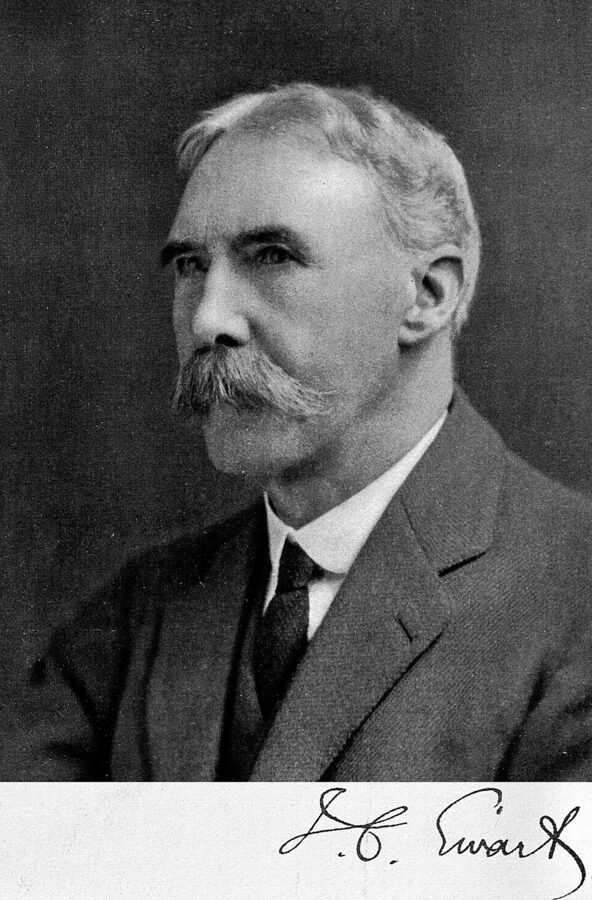
Ewart’s advice was that sending good stallions west was not enough. The breed needed good mares as well as good sires, kept at stud farms in the pony districts themselves, to add bone without losing the hardiness, stamina and temperament. Nobody acted on it for more than twenty years.
The society and the studbook
Michael O’Malley was born in Ros Muc in 1884, trained as a vet, kept bees, took photographs and helped found the Irish college there. After Olympia he wrote letter after letter to the newspapers about the danger of the old pony disappearing into a mass of crossbreds. Irish-language accounts name his helper on the 1912 trip as Pádraig Breathnach of Ros Muc; the society calls him Joe Walsh. Breathnach is the Irish form of Walsh, so the surname at least agrees.
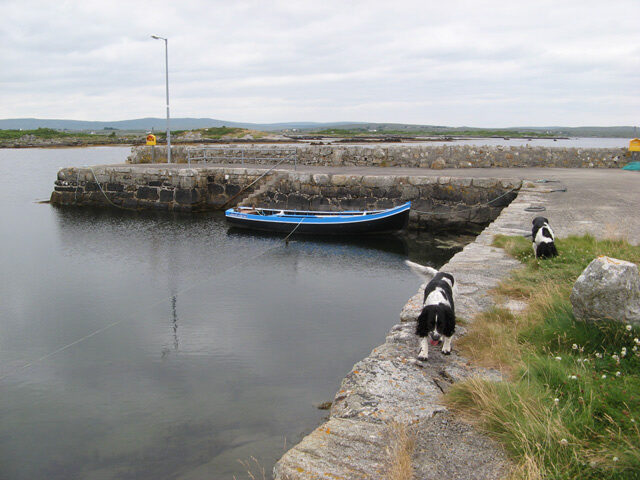

In December 1923 a public meeting called by the Galway County Committee of Agriculture and the Department of Lands and Agriculture formed the Connemara Pony Breeders’ Society “for the preservation and improvement of the Connemara pony”. The scheme it adopted followed Ewart: improvement would come from within the breed, with up to 100 mares of the right type selected as foundation stock and the necessary stallions found to go with them. It asked the county committee and the department for a hundred pounds each, to give free nominations to mare owners, buy stallions and put on a show.
Inspections began in April 1924, when 125 free nominations, each worth a pound, went to brood mares picked at centres around the county. The society’s history calls those inspections central to the foundation of the studbook, and they are still how a pony gets into it.
The foundation stallions
In May 1924 the council bought its first two stallions for twenty pounds each and stood both at An Caiseal: Gold Digger, a five-year-old dun of 13.2 hands, and Connemara Dan, a two-year-old black of 13.1. Three privately owned stallions were approved for the same season. Cannon Ball, a grey of 13.3 hands, was already twenty years old and stood at Oughterard (Uachtar Ard), the town at the eastern gate of Connemara. Rebel, a two-year-old grey of 13.2, stood at Roscahill, and Mount Gabel, a seven-year-old bay of 13.2, at An Fhairche (Clonbur).
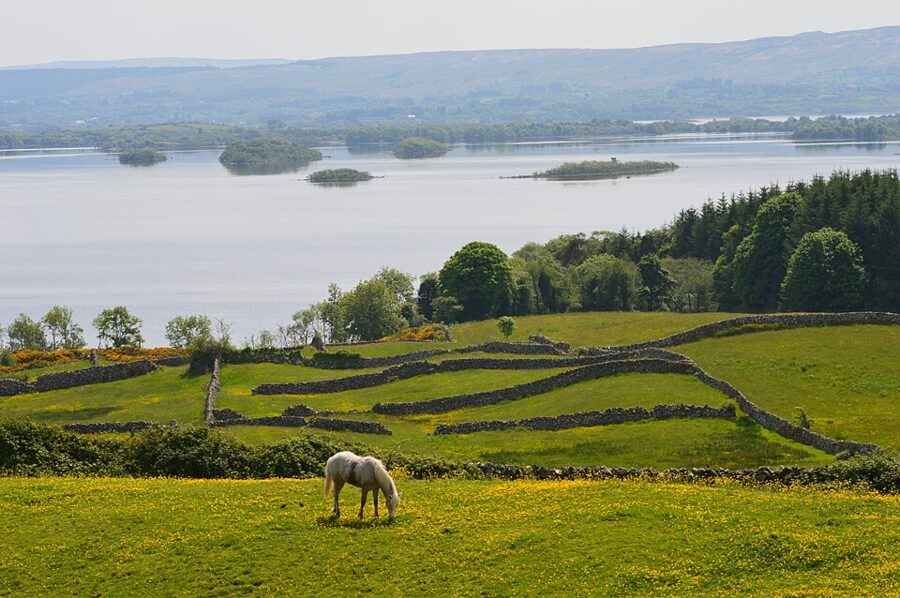

Cannon Ball took number 1 in the studbook and Rebel number 7, and pedigree records give Rebel as a son of Cannon Ball, so the first and the seventh entries in the book were father and son. The numbers you see in brackets after the old stallions’ names, Gold Digger (5) or Connemara Dan (3), are those studbook numbers.
Volume 1 of the studbook appeared in 1926. It recorded nine stallions and ninety-three mares, cost forty-five pounds to print and sold for a shilling. By Volume 21, published in 1999, the stallion register had reached number 1,043 and the mares 11,621. The record has been continuous since 1923, has been kept on computer as well as in print since 1992, and covers every registered Connemara birth in all 32 counties.
The society today
The society has its offices at the showgrounds in Clifden, which it bought in the 1960s for the show, and it opens the office to callers on weekday mornings, 09:30–12:30. It keeps the studbook, issues passports, runs the spring and autumn inspections of colts and fillies, and sets the rules for the daughter societies abroad. Geldings are now measured at a filly inspection and classified by height alone.
It has had a turbulent year. In February 2026 six council members resigned, the president among them, and the remaining council pressed ahead with a review of the society’s constitution. The show it founded is part of that story.
A working animal first
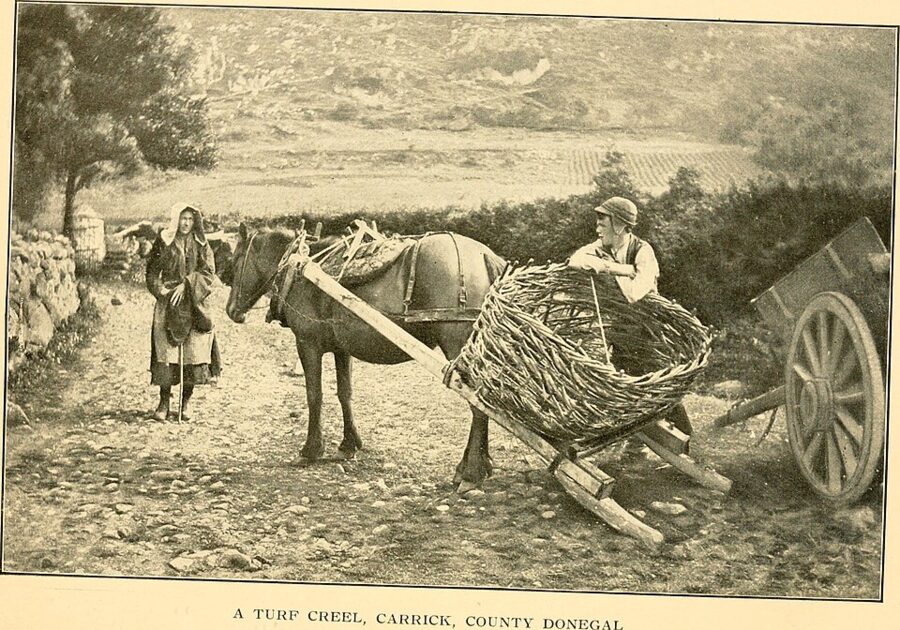
Before tractors, the pony did the carrying on a small Connemara holding. It brought turf home from the bog in a pair of creels slung across its back or in a cart; it carried seaweed up from the shore to spread on the potato ridges; it took goods to market and the family to Mass. Fishermen kept them as well as farmers. The society says it has long been asked, by schools, breeders and visitors from abroad, how the ponies were used before mechanisation, which tells you how quickly that life went.
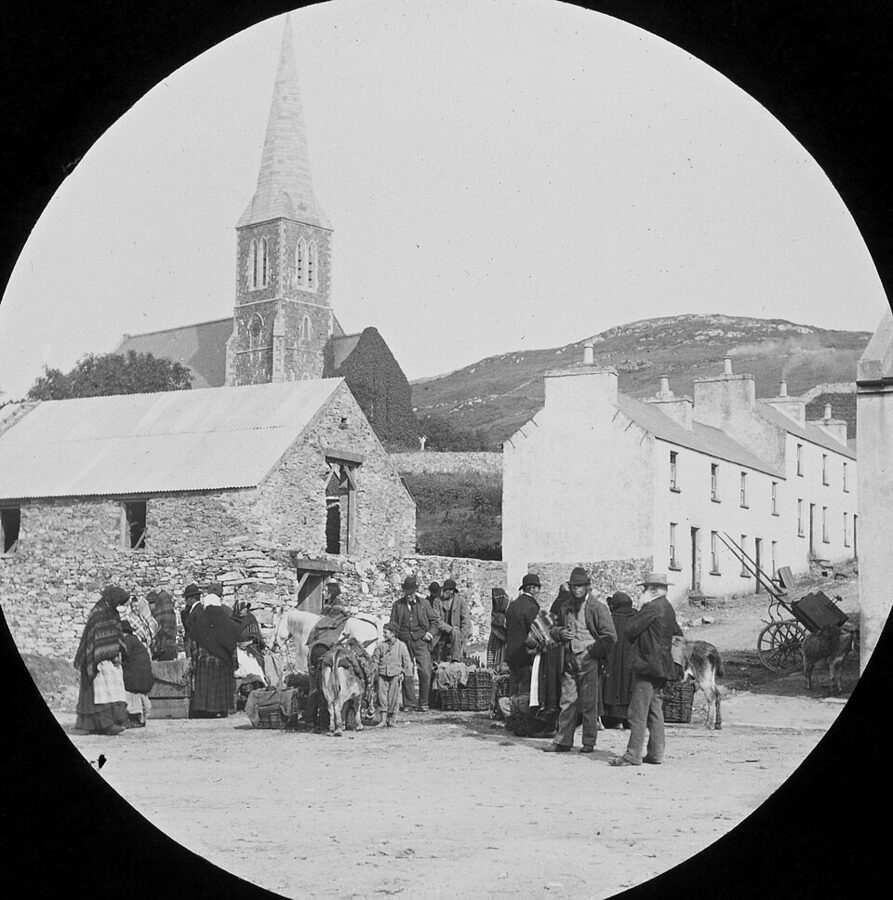
The work shaped the animal as much as the grazing did. A pony that carried creels on a bog road had to place its feet carefully, stand quietly while it was loaded and keep going when it was tired. A pony that hauled wet weed up a shingle shore needed a strong back and hard feet. Those are the qualities the society set out to fix in 1923, and the ones buyers still pay for.
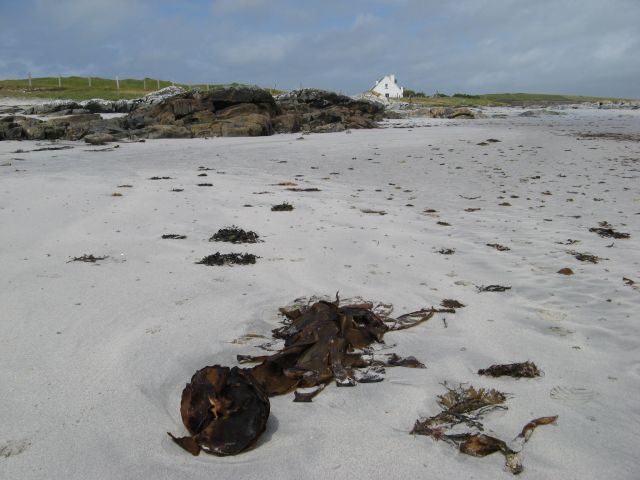
Seaweed was the other harvest. Kelp and wrack were gathered off the shore after storms, carted up and spread on the fields as fertiliser for potatoes. Look along any strand west of Roundstone after a winter gale and you will see what the ponies used to haul.

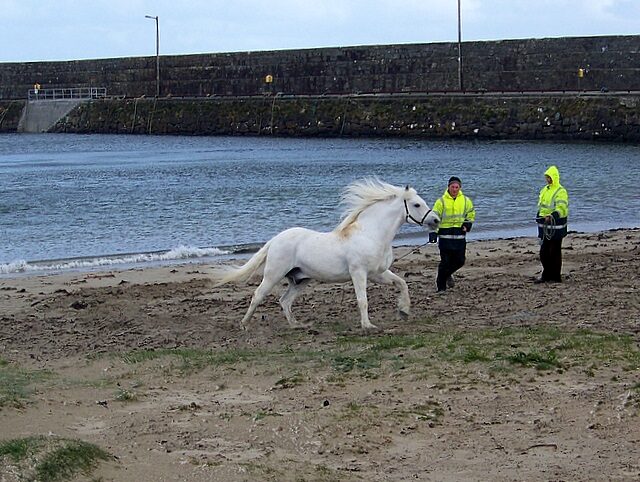
Mechanisation ended most of that work within a generation, and for a while it looked as if the pony would go with it. What saved it was the jump.

From the bog to the Olympic arena
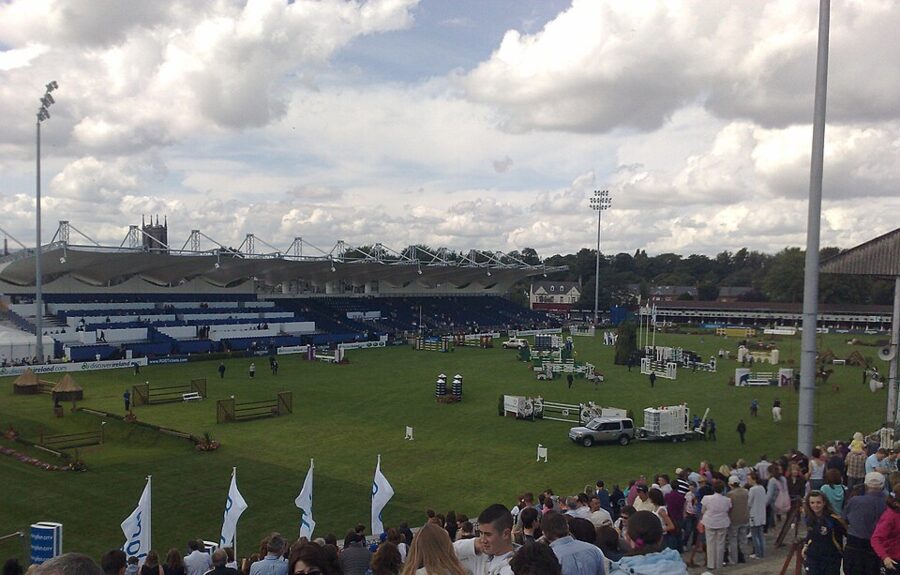
The Connemara is now first and foremost a sport pony. It competes in show jumping, eventing and dressage, has the stamina for endurance riding and goes well in harness. It is big enough for a light adult and sensible enough for a child, which is the combination pony clubs everywhere are looking for. The Royal Dublin Society added Connemara classes to its Spring Show in 1951 and has run them every year since.

Stroller and the 1968 Olympics
The most famous pony with Connemara blood was Stroller, a bay gelding foaled in 1950 by a Thoroughbred out of a Connemara mare, who stood about 14.1 hands. Ridden by Marion Coakes, he won the Hickstead Derby in 1967, still the only pony to have done it. At the Mexico City Olympics in 1968 the pair jumped one of only two clear rounds in the individual competition and took the silver medal for Britain, four faults behind Bill Steinkraus and Snowbound. Stroller won the Hamburg Derby at twenty and died in 1986, aged 36.
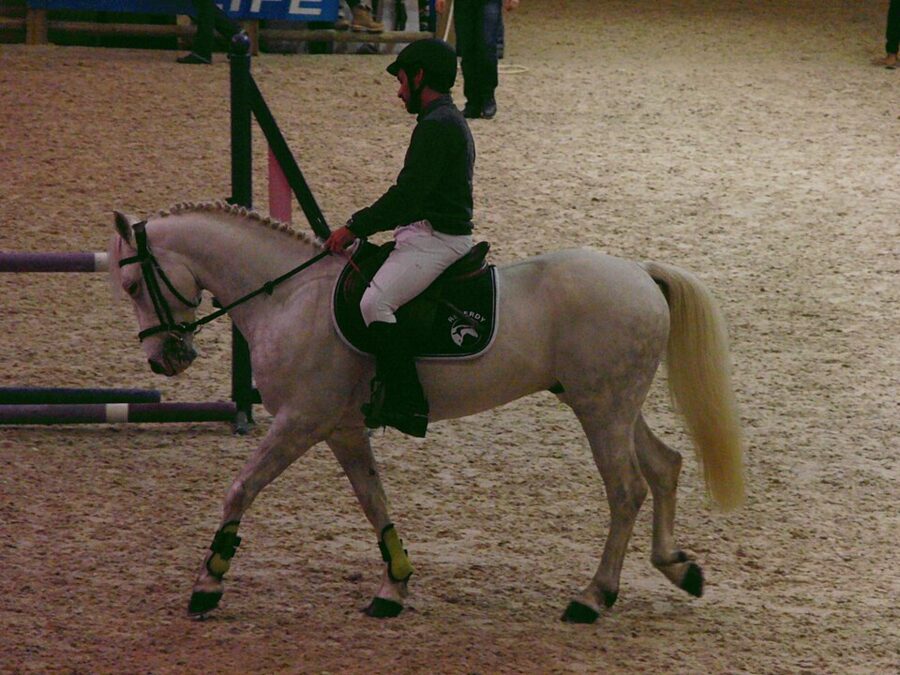

Purebreds have done it too. A grey Connemara mare, Ballyowen Maybelle Molly, won individual gold at the European Pony Showjumping Championships under Kellie Allen, on an Irish team that took silver with two purebred Connemaras in it. The pull of the sport market shows in the breeding: the 2023 genomic study describes fifty years of selection swinging between the traditional hardy pony and the agile athlete, and much of the argument among breeders is about how far that should go.
Societies around the world
The parent society lists affiliated societies in fifteen countries: the United States, Canada, Great Britain, France, Belgium, the Netherlands, Germany, Austria, Switzerland, Denmark, Norway, Sweden, Finland, Australia and New Zealand. All of them work to the Irish breed standard and rules, and a breeding prefix registered with any of them is held for life. In North America the ponies run a little bigger, from about 13 to 15 hands.
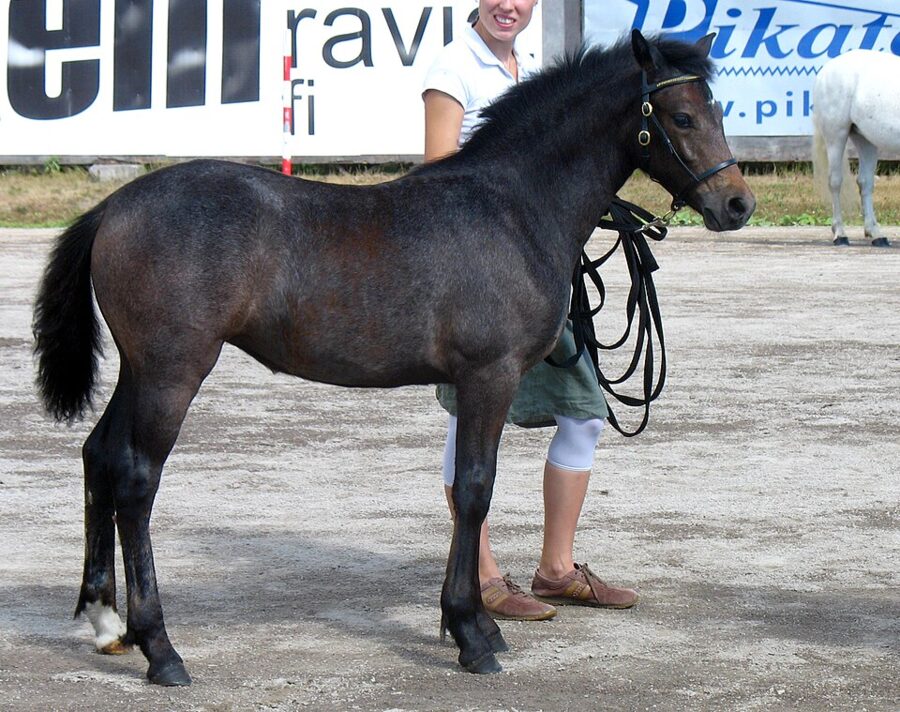

Exports have gone out of Clifden for a century, and the Irish abroad have taken the pony up as a link with home. The society’s own studbook remains the reference for all of them, which is why a breeder in Indiana or Finland still cares what happens at an inspection in Clifden.

The show, the sales and the fairs
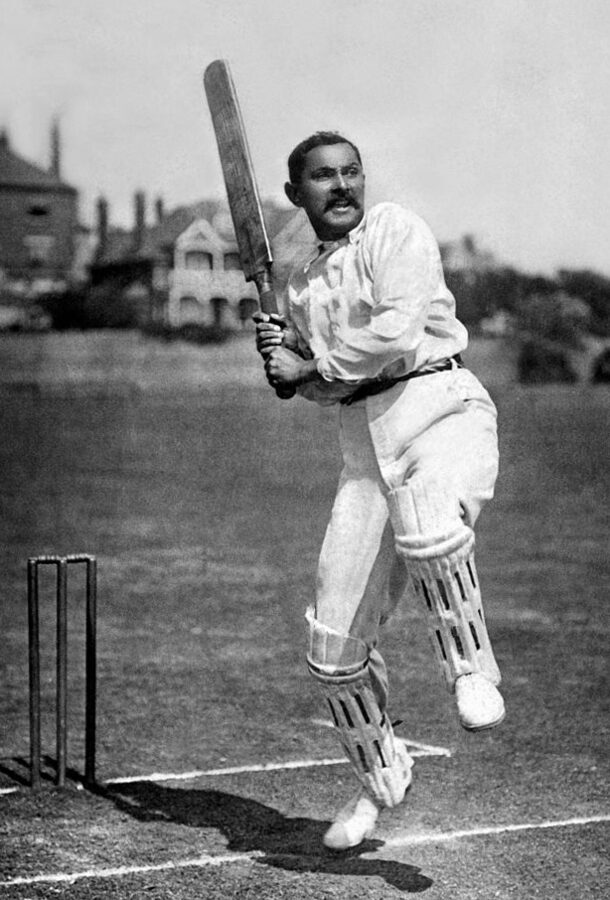
The society held its first show at Roundstone on 15 August 1924. There were 500 entries in all, 150 of them in the Connemara pony section, and the stallion class went to the society’s own Gold Digger, with old Cannon Ball second at twenty. The opening was performed by Ranjitsinhji, the Indian cricketer, who had lately come to live at Ballynahinch Castle.
The second show was held at Recess (Sraith Salach), and the third to the twenty-third at Carna, in the Irish-speaking south-west. In 1947 the twenty-fourth show moved to Clifden and it has stayed there ever since, traditionally on the third Thursday in August and now spread across most of the week.
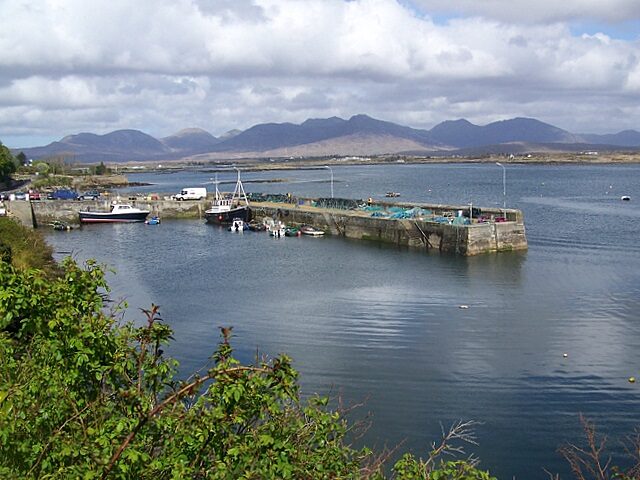

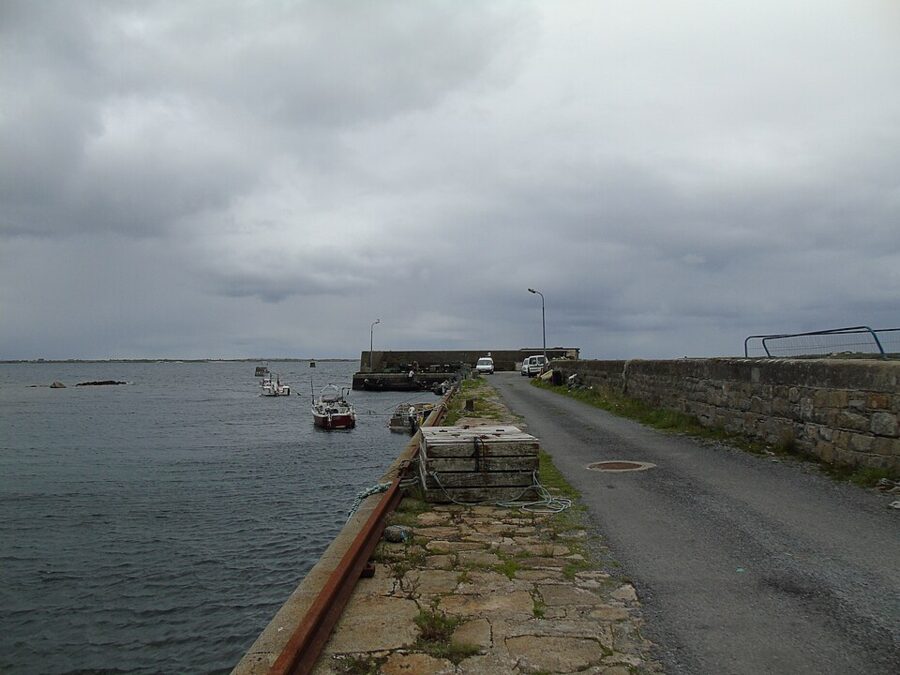

The Connemara Pony Show in Clifden
The 2026 show, the 101st, ran from 18 to 21 August. It opened with the loose-jumping championships, gave a day to the in-hand classes and the supreme championship (with domestic arts, a dog show and Irish dancing on the side), a day to the ridden classes, and finished with the working hunters and the parade of champions. It is the largest gathering of Connemara ponies anywhere, and for breeders it is the shop window of the year.
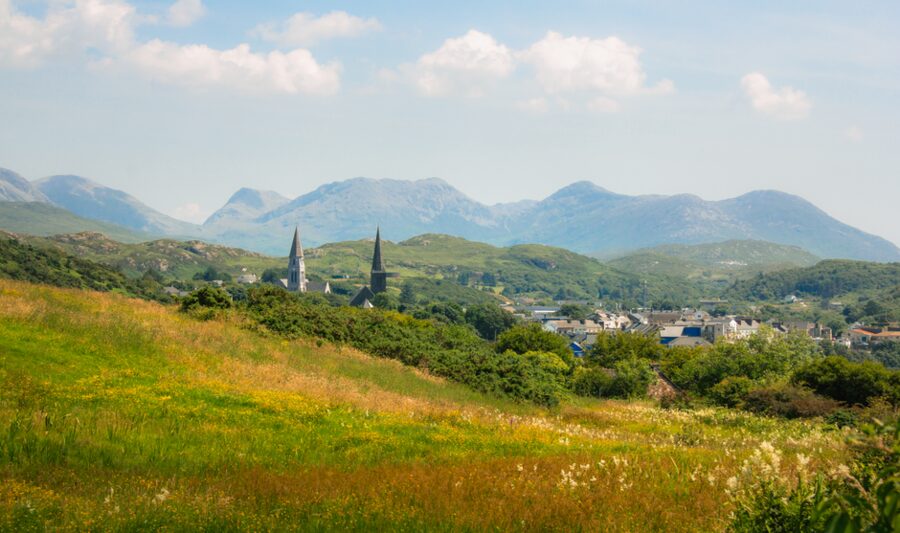
For 2025 and 2026 the show was run under licence by a separate company, Connemara Pony Show Clifden CLG. In October 2026 that company announced it would not manage the 2027 show, after the society said it wanted the show back under its own direct control. The company will still help the Connemara Chamber with the festivities in town during show week.
At the end of November 2026 the society’s show page had no 2027 dates yet. Expect mid-August, check before you book, and book early.
The sales in Clifden
The Connemara Pony Sales, run by Connemara Livestock Sales in Clifden, catalogue more than 3,500 ponies a year at sales in February, April, May, August, September, October, November and December. On a sale day there can be over 200 ponies through the ring, with bidding at the ringside, online and by phone, and buyers from across Europe, North America and Asia. The November 2026 sale was set for 27–29 November, starting at 09:30, with online bidding through MartEye.
The sales are the best place to see working Connemara breeders at close quarters, and a quiet onlooker at the ringside is no trouble to anyone. In 2025 the August sale ran from 22 to 24 August, overlapping the end of show week, with more than 700 lots.
Maam Cross and the summer shows
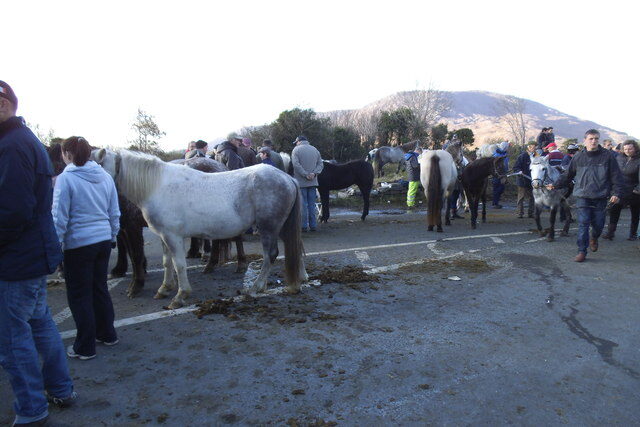
Maam Cross (An Teach Dóite, the burnt house) is a crossroads in the bog with a hotel and a mart, and once a year it becomes a fair. The October fair is held on the Tuesday after the October bank holiday; in 2026 that was 27 October. It is a one-day horse fair of the old kind, with ponies tied to trailers along the road, and it sells far more than Connemaras: cobs and coloured ponies change hands too.

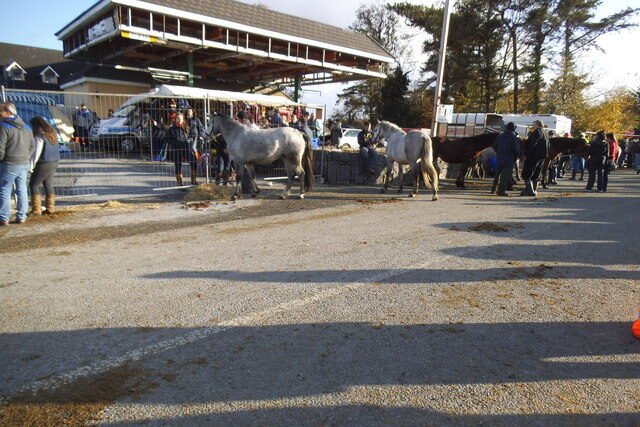

In July the local shows come round on successive Sundays. The 2027 horse-fair calendars already list the Maam Cross Connemara Pony Show for 4 July, the Roundstone Connemara Pony, Dog and Sheep Show for 11 July and the Ballyconneely Agricultural Show for 18 July. They are small, local and much easier to enjoy than Clifden in August. And if you are still around at Christmas, the society holds a foal show at Creagh, near Ballinasloe, on 13 December 2026 from 10:30.

Where to see Connemaras in Connemara
Connemara National Park, Letterfrack
The easiest place to see the breed outside show week is Connemara National Park at Letterfrack (Leitir Fraic), whose herd began with ponies presented to the State by President Erskine Childers. The Sruffaunboy loop from the visitor centre passes the pony paddock, and in July and August the guides run pony information sessions at the stables, where you can meet one close up.
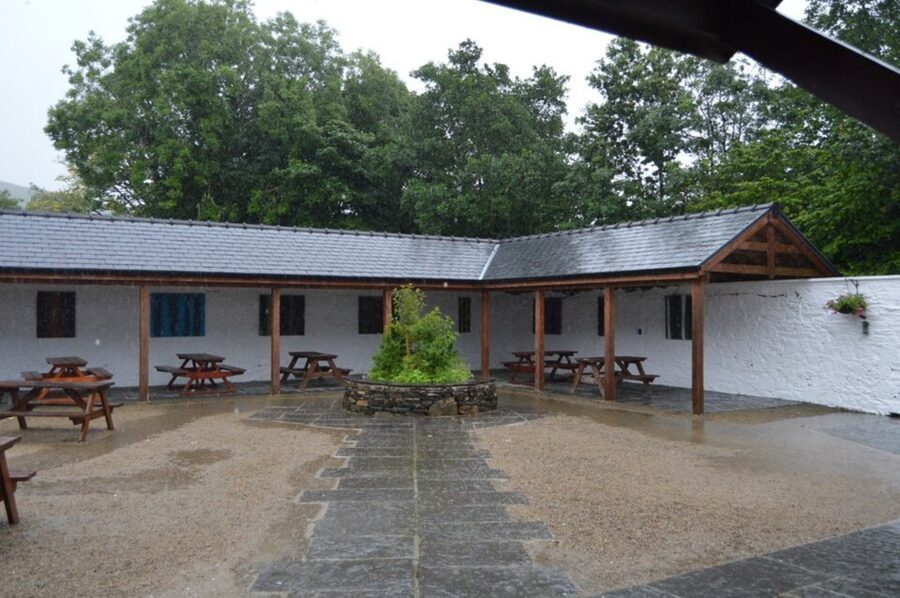

The park also has the Connemara Pony Heritage Centre, which opened on 31 October 2025: free, accessible to wheelchair users, and told through film, narration and old photographs. Since July 2026 the visitor centre itself has closed on Mondays and Tuesdays except bank holidays, but the park notice says the trails, the café and the pony heritage centre stay open on those days. The visitor centre opens Wednesday to Sunday, 09:00–17:30, and entry and parking are free. I’d do the heritage centre first and the paddock second; the ponies make more sense once you know what you are looking at.
Studs and trekking
Diamond’s Equine at Renvyle, which calls itself the Connemara Pony National Stud, is a family stud and trekking centre standing several performance stallions, one of them the 2026 Clifden junior champion. Its riding centre closed for the winter break in late November 2026; in July and August it takes trekking bookings by phone only. It is one of the few places where you can ride a Connemara in Connemara and see the breeding side on the same visit.
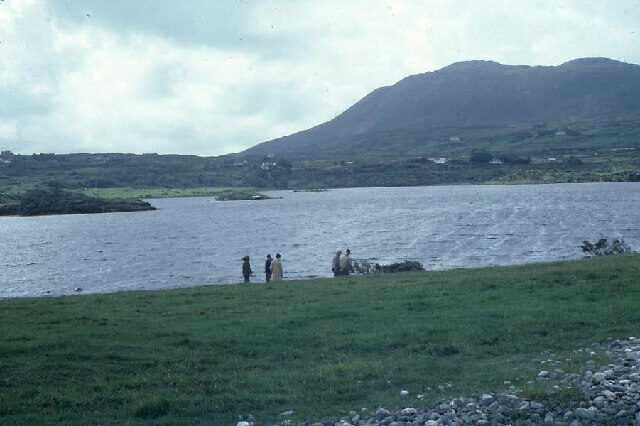

Other riding centres along the coast offer beach treks; check that a centre is open for the season before you plan a day round it. Whichever you choose, look for approval by the Association of Irish Riding Establishments.
By the road
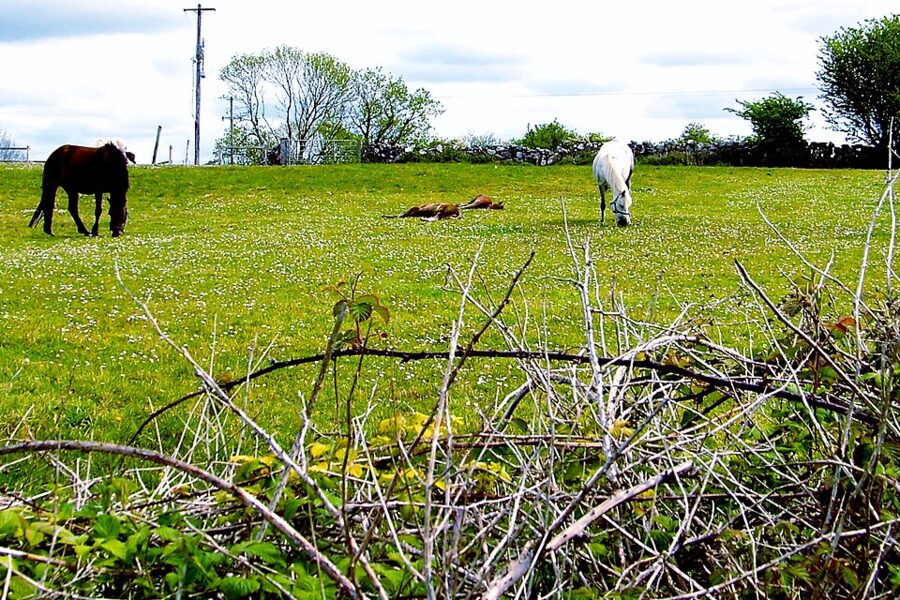
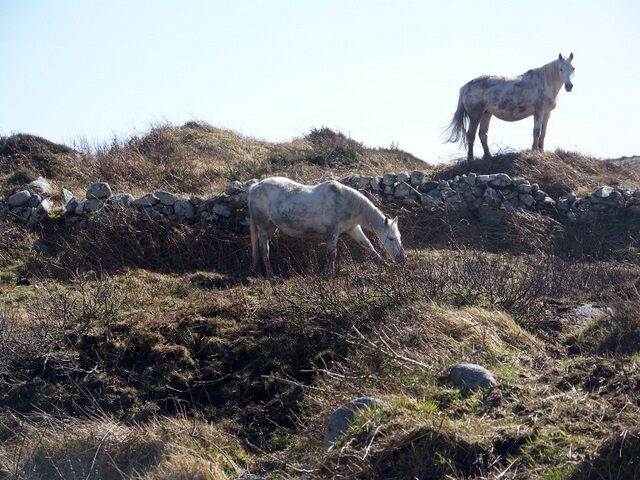
The rest of the time, drive slowly. The coast between Roundstone and Ballyconneely, the bridges out to Inis Ní and the islands of the south Connemara Gaeltacht are pony country, and you will see mares and foals in the small walled fields through the summer. They are someone’s stock, often valuable, so stay outside the wall, don’t feed them, and pull in properly if you want a photograph.

Without a car, Citylink’s route 923 runs from Galway to Clifden in about 1 hour 30 minutes, which gets you to the show, the sales and the society’s office. The park at Letterfrack is a short hop further on some journeys.
Buying and owning, in brief
Every pure-bred Connemara born in Ireland is registered with the society, which issues its passport. A foal can only be registered if both sire and dam are known, and registration starts with a DNA kit; the passport takes about 8–10 weeks. A pony’s name is fixed for life once the passport is issued.
A new owner has 30 days to transfer ownership under EU rules, and anyone keeping a horse in the Republic needs an Equine Premises Number from the Department of Agriculture. The society’s registration questions page sets out each step.
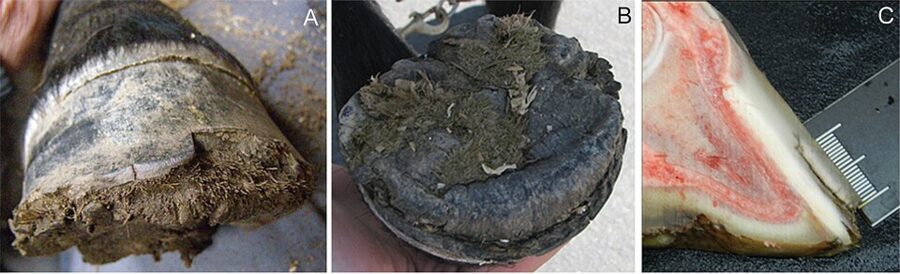

The one inherited disease specific to the breed is hoof wall separation disease, or HWSD. It is recessive, caused by a single mutation in the SERPINB11 gene, and about 14.8% of Connemaras carry it; carriers are healthy, but two carriers can produce an affected foal. A 2022 review describes the cracking and lameness that follow. The society recognises only HWSD results from tests it arranges through Weatherbys Scientific, so ask to see the result recorded in the passport.
Irish law also says nobody may sell an animal to a child who appears to be under 16 unless an adult is with them. The rest, price included, is between you, the seller and a vet. The breeding programme page has the inspection rules if you plan to breed.
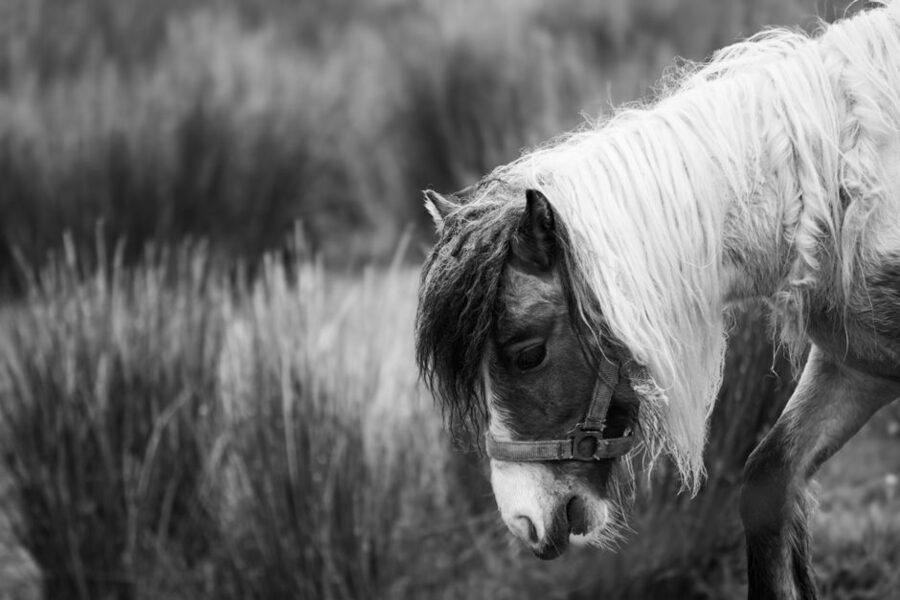
Irish Dragoon and Eileen Alanna walked out of Ros Muc in the summer of 1912 to show London the best pony in the world. Now the buyers come the other way, from three continents, to a sale ring and a showground in Clifden. You can make the short version of O’Malley’s trip in an afternoon: north out of Ros Muc to the Galway road, west through Recess and on to the showground, past the bog, the walls and the small fields the breed was made in. Go in the third week of August if you can, and in spring if you want to see the foals.