

On the shortest day of the year the sun rises over Clifden (An Clochán) at about 08:53 and is gone by 16:22. Six months later it is up at 05:10 and still lighting the bay at 22:12. That swing of nine and a half hours of daylight, more than the weather and more than any festival, is what decides how a year in Connemara runs.
The name explains the place before the calendar does. Connemara (Conamara) comes from Conmhaicne Mara, the Conmhaicne of the sea: one branch of an old people, the one whose land ran down to the shore. Most of what happens here through the year still happens at the edge of the water, from currach races in the Gaeltacht bays to horse races on a strand the tide gives back for a few hours.
On this page9 sections
- How the year runs here
- January and February: the quiet months
- March and April: St Patrick's Day to Easter
- May and June: the long evenings
- July and August: regattas, strand races and the pony show
- September and October: arts, trad and the turn of the bog
- November and December: Christmas and the dark
- Things to do, season by season
- Planning a visit
How the year runs here
The visitor season runs from Easter to the end of October. At Easter the boats, the gardens, the cafés and most of the bigger hotels open; in October the timetables shrink and a good share of the kitchens close for the winter. The Killary boat at Leenane (An Líonán), for example, sails from April to October, and the Leenane Hotel shuts from early January to late March.
What stays open all year is the land itself. Connemara National Park is open year round and free, though its visitor centre at Letterfrack (Leitir Fraic) now opens only from Wednesday to Sunday, 09:00 to 17:30, plus bank holiday Mondays. The Aran ferries sail from Ros an Mhíl (Rossaveel) every day of the year, the boat to Inishbofin (Inis Bó Finne) runs a winter timetable, and the beaches and hills are there in every month.
Ireland’s public holidays shape the calendar. Many of the festivals below sit on a bank holiday weekend: the first Monday in May, June and August, and the last Monday in October. In 2027 Easter Sunday falls early, on 28 March, which pulls the start of the season forward.
The weather in plain numbers
The nearest long-running Met Éireann station on this stretch of coast is Belmullet, on the Mayo shore about 80 km north of Clifden, and its 1991–2020 averages are a fair guide to the Connemara coast. The mountains get a good deal more rain than the shore, and the inland valleys are a little colder in winter.
| Month | Average high | Average low | Rain | Days with 1 mm or more | Sunshine a day |
|---|---|---|---|---|---|
| January | 8.9 °C | 3.9 °C | 137 mm | 20 | 1.4 hours |
| February | 9.2 °C | 3.9 °C | 110 mm | 18 | 2.4 hours |
| March | 10.5 °C | 4.9 °C | 91 mm | 17 | 3.5 hours |
| April | 12.2 °C | 6.0 °C | 74 mm | 14 | 5.3 hours |
| May | 14.6 °C | 8.2 °C | 71 mm | 13 | 6.3 hours |
| June | 16.3 °C | 10.6 °C | 73 mm | 12 | 5.6 hours |
| July | 17.6 °C | 12.3 °C | 86 mm | 15 | 4.4 hours |
| August | 17.7 °C | 12.4 °C | 101 mm | 16 | 4.6 hours |
| September | 16.5 °C | 11.0 °C | 103 mm | 16 | 4.0 hours |
| October | 13.8 °C | 8.7 °C | 131 mm | 19 | 3.0 hours |
| November | 11.0 °C | 6.3 °C | 140 mm | 21 | 1.7 hours |
| December | 9.2 °C | 4.6 °C | 127 mm | 21 | 1.2 hours |
Two things stand out. May is both the driest and the sunniest month, which is why I would choose it over July if you can only come once. And the summer is mild rather than warm: an average high of under 18 °C in August, with the sea taking until late summer to lose its chill.
Wind is the other number to know. Belmullet averages more than six days of gale in January and fewer than one in each summer month, and its strongest gust of those thirty years, 94 knots, came in January.
Daylight swings harder than the temperature: fifteen hours by the start of May, under ten by the first of November.
January and February: the quiet months
Midwinter is the emptiest time of year here, and for some people the best. Many hotels and restaurants are closed, the island guesthouses are shut, and the roads that queue in August are yours. Clifden’s pubs still have music at weekends, and on a dry day the walks are as good as ever if you finish before the light goes at about half past four.
The one fixed event of January is in Irish. Scoil Gheimhridh Joe Steve, a winter school named for the Cois Fharraige writer and actor Joe Steve Ó Neachtain, fills four days with talks, drama, song and set dancing in the halls and theatres of the coast west of An Spidéal (Spiddal). The 2026 school ran from 22 to 25 January and was opened by President Catherine Connolly. You do not need fluent Irish to enjoy the dancing, but the talks are for speakers.
February brings the first sign of the turn. Lá Fhéile Bríde, St Brigid’s Day, on 1 February is now a public holiday on the first Monday of February (1 February itself in 2027), and Brigit’s Garden at Rosscahill, on the Galway side of Oughterard (Uachtar Ard), runs workshops in making the rush crosses that used to hang in every kitchen here.
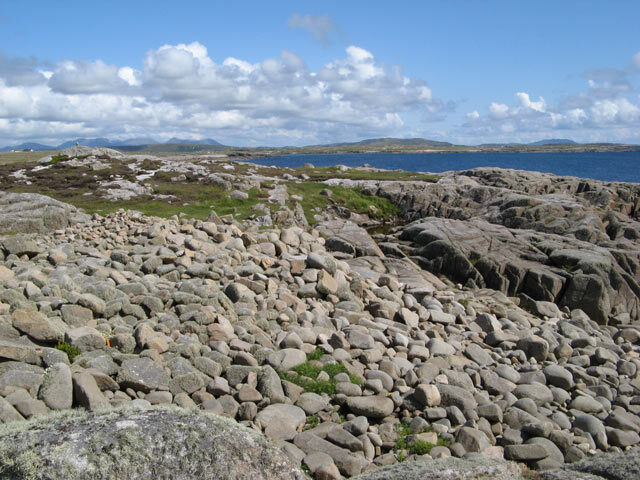
Winter is also when the weather is the show. A south-westerly gale piles the Atlantic onto the rocks at Aughrus, the Sky Road and the west end of Omey Island (Iomaí), and watching it from a parked car or a sheltered wall is a Connemara pastime in its own right. Stay well back from the edge: waves on this coast run far higher up the rocks than they look from a distance.


March and April: St Patrick’s Day to Easter
St Patrick’s Day
Clifden holds the main St Patrick’s Day parade in the west of Connemara, usually setting off around the middle of the day on 17 March. It is a small-town parade of bands, schools, sports clubs and home-made floats, with the whole town on the footpath.
In 2026 the town added a first Clifden Piano Festival on 15 and 16 March, with pianists in the hotels and pubs and Phil Coulter at the Station House Theatre. Check whether it returns before planning around it.
The land wakes up
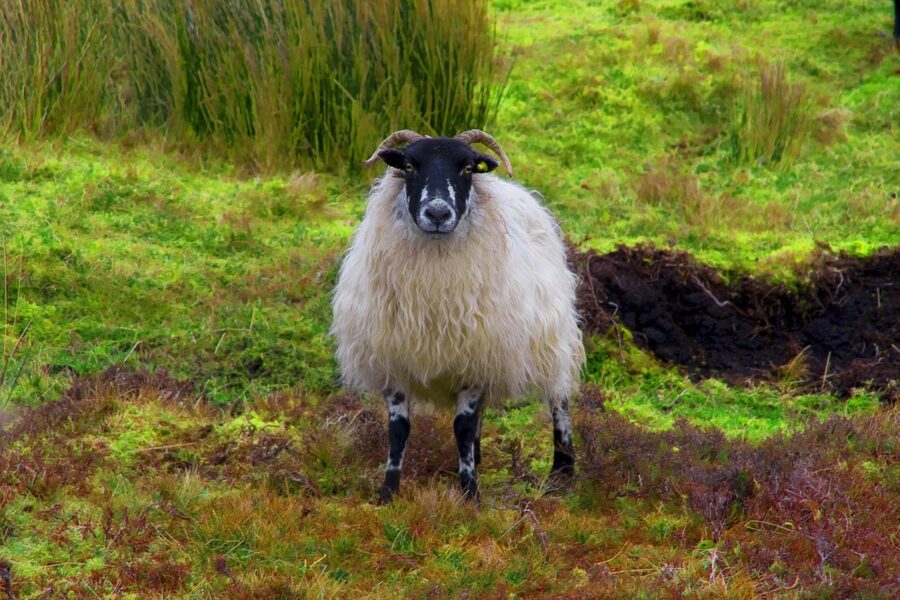
Spring comes late to the bog and early to the gorse, which can be yellow along the roadsides by March. Lambing runs on the hill farms through March and April, and the primroses come out on the ditch banks a week or two after. By April the days are long enough for a proper mountain walk and the rain has eased: April at Belmullet averages 74 mm against 137 mm in January.
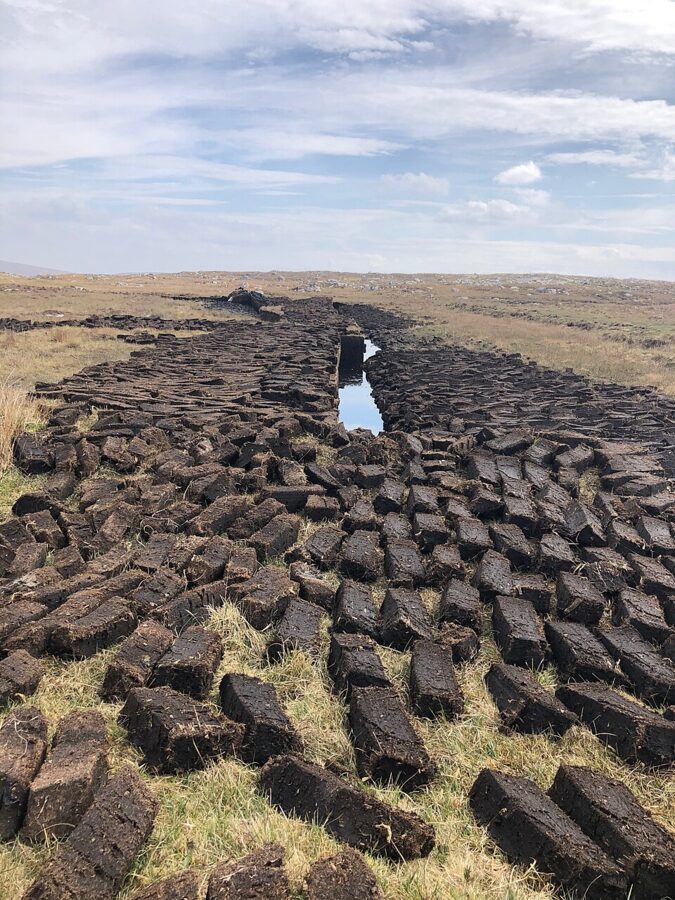
April and May are also when the turf comes out of the bog. Families with turbary rights cut and spread the sods to dry along the bog roads, and in a good drying spring you will see them footed, stood on end in little stacks, by May. It is cut much as it was a century ago, though with fewer hands.

Easter and the first openings
The Clifden Traditional Music Festival, known locally as Trad Fest, opens the season the weekend after Easter. In 2026 it ran from 9 to 12 April; the organisers have given 1 to 4 April for 2027. Most of it is free: a session trail through the pubs, workshops, an opening concert, a busking competition and a 5 km run.
The Connemara International Marathon, the Connemarathon, runs on a Sunday in late April over the mountain roads of the Maam and Inagh valleys and round Leenane. It offers a half, a full and an ultra of about 63 km. The 2026 race was on 19 April, and the 23rd Connemarathon is set for 25 April 2027. Places go early, and the roads it uses are slow for much of the day, so plan your driving round it.
May and June: the long evenings
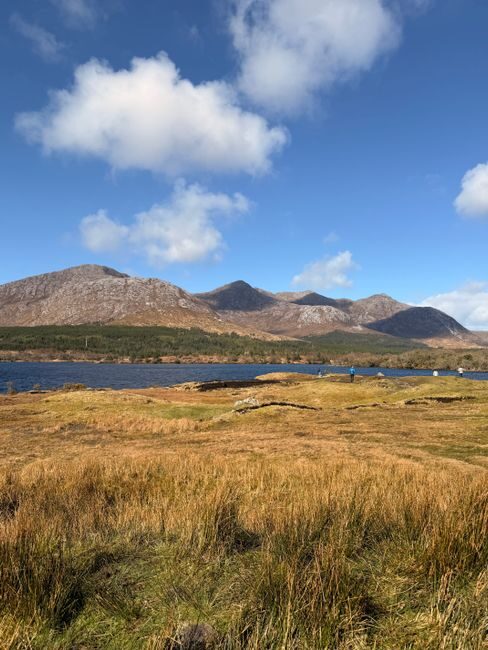
If I had to pick two months, these would be them. The light lasts past 22:00, the bog is in flower, the summer crowds have not arrived and the rain is at its lowest. Accommodation is easier to find than in July, except on the May bank holiday weekend, which is the busiest festival weekend of the spring.
The May bank holiday weekend
Three festivals share the first weekend in May. In Carna, Féile Joe Éinniú remembers Joe Heaney (Seosamh Ó hÉanaí), the Carna singer who carried sean-nós, the old unaccompanied style of singing, to concert halls in Britain and America. It runs over the bank holiday weekend with concerts, sessions and workshops, and 2026 was its fortieth year.

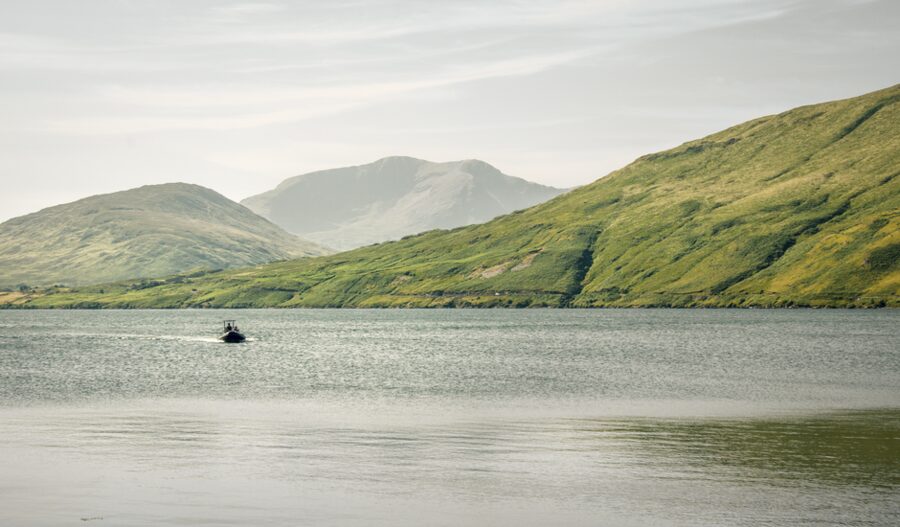
At Leenane, the Connemara Mountain Walking Festival runs guided hill walks at several grades on the mountains round Killary Harbour, with a short lesson in the Irish names of the peaks thrown in. The 2026 festival ran from 1 to 3 May, and 2027’s is set for 1 and 2 May. Out on the islands, the Inishbofin Arts Festival takes the same weekend, the first of a run of island festivals that lasts until late September.

Walking, cycling and the bog in flower
Mid-May brings the Inishbofin Walking Festival, three days of guided walks on the island (15 to 17 May in 2026). Then, late in May, Clifden fills with cyclists for the Tour de Conamara sportive, 140 km or 80 km round the coast from the Station House, which in 2026 was on Saturday 23 May. Entry was €60 and it usually sells out within a day of opening; if you are not riding, avoid the roads round Clifden that morning.
Bog Week in Letterfrack straddles the end of May and the start of June, with guided bog walks, peat-coring demonstrations and a walk with tea, music and poetry on the bog. The 2025 programme ran from 30 May to 6 June; check the national park for the 2027 dates in spring.
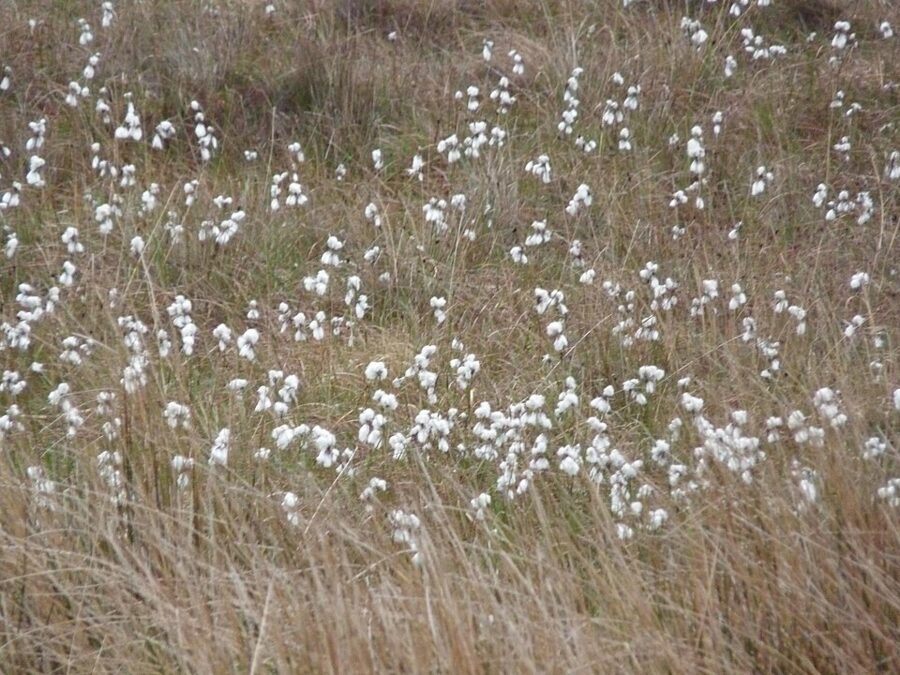
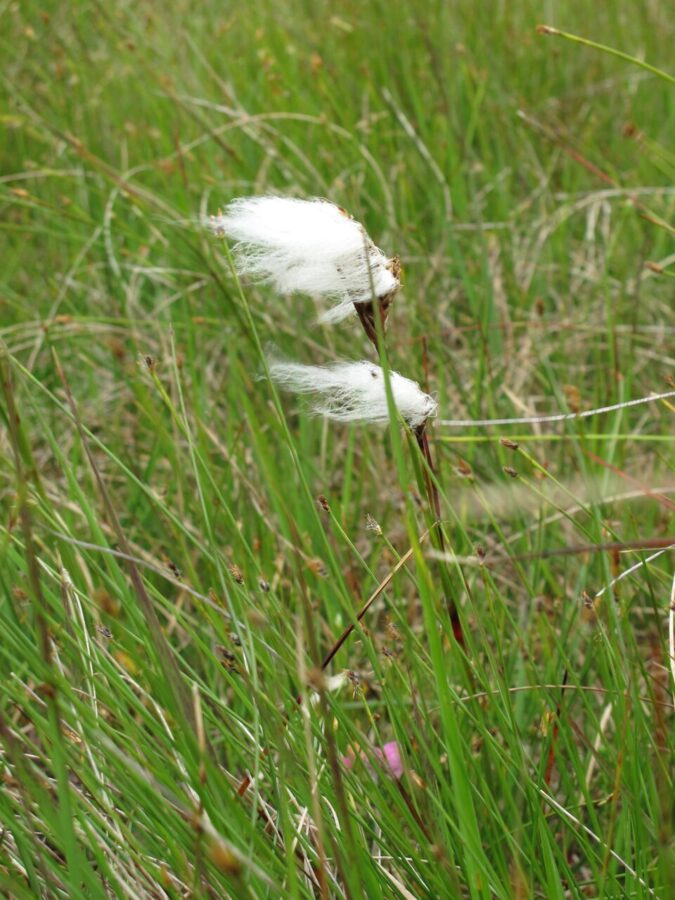
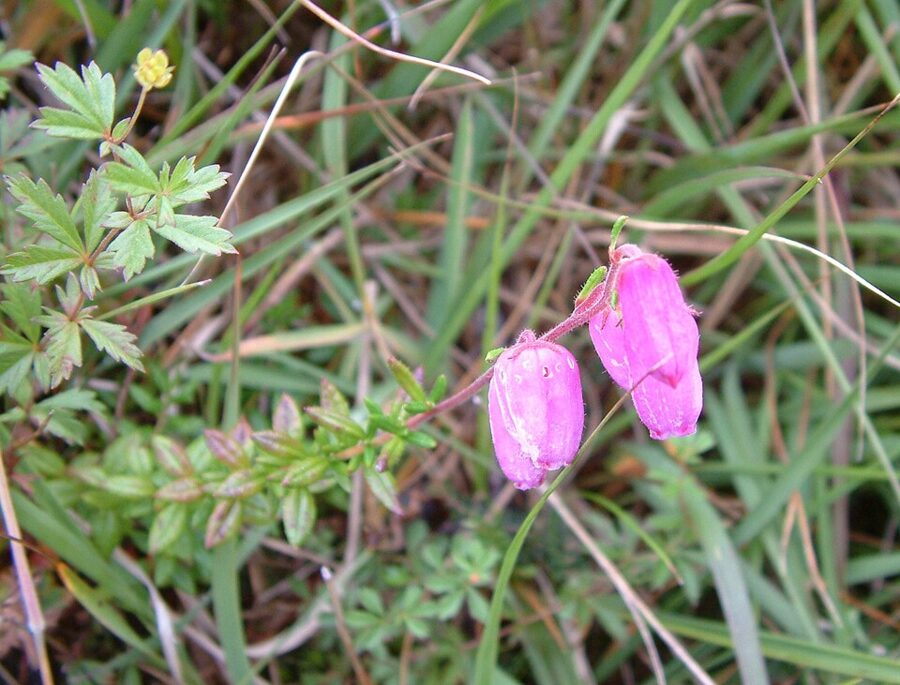
The bog is at its best now. Bog cotton turns whole slopes white from May into June, the purple-pink bells of St Dabeoc’s heath start to open on the drier hummocks, and the yellow spikes of bog asphodel follow into July. St Dabeoc’s heath is the Connemara speciality: in Ireland it grows wild only here and in south Mayo.

June
June opens with another bank holiday weekend and, in Clifden, a marquee music festival: Clifden Summer Fest ran from 12 to 14 June in 2026. On the Gaeltacht coast the currach racing season begins in mid-June, with Féile na mBád at Ros Muc on 14 June in 2026. Ros Muc is usually explained as the headland of the rounded hills, muc being an old word for a hump of ground as well as a pig.
The Doolough famine walk, just over the Mayo border, retraces the road where hungry people walked through the night in March 1849; the 2027 walk is on Saturday 19 June, about 20 km by road from Leenane. And on the longest day, 21 June, Brigit’s Garden ran a free day of guided nature walks in 2026.
Sea swimming starts in earnest now, though the water is still cold. The calm white-sand bays south of Roundstone (Cloch na Rón) and on the Renvyle peninsula are the ones to try first.


July and August: regattas, strand races and the pony show
High summer is when Connemara is most itself in public. The regattas, the strand races, the community festivals and the pony show all fall in about eight weeks. It is also when the place is busiest and dearest, so book beds early and expect queues on the N59.
The boats
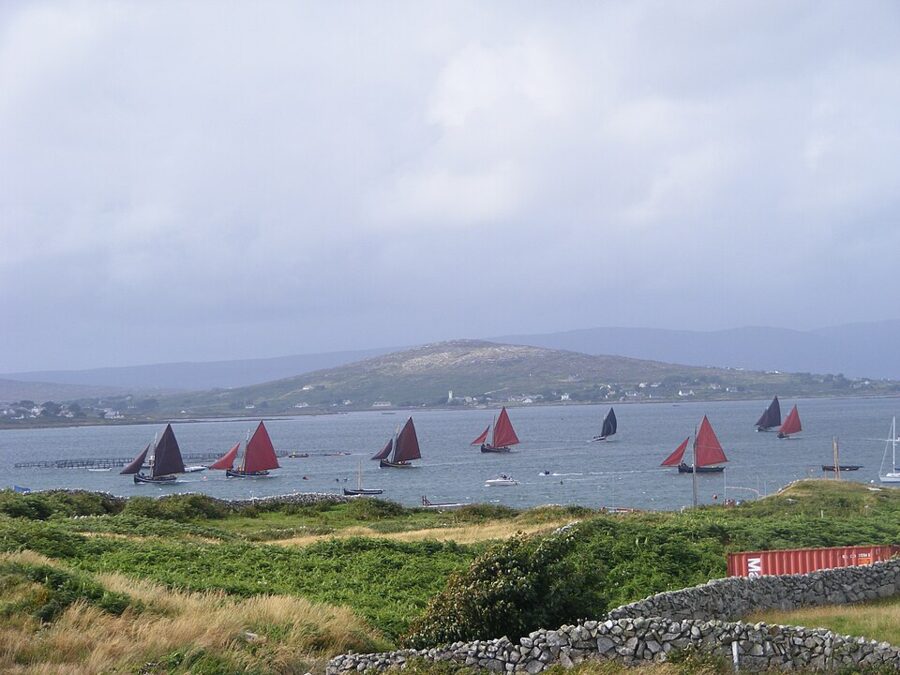
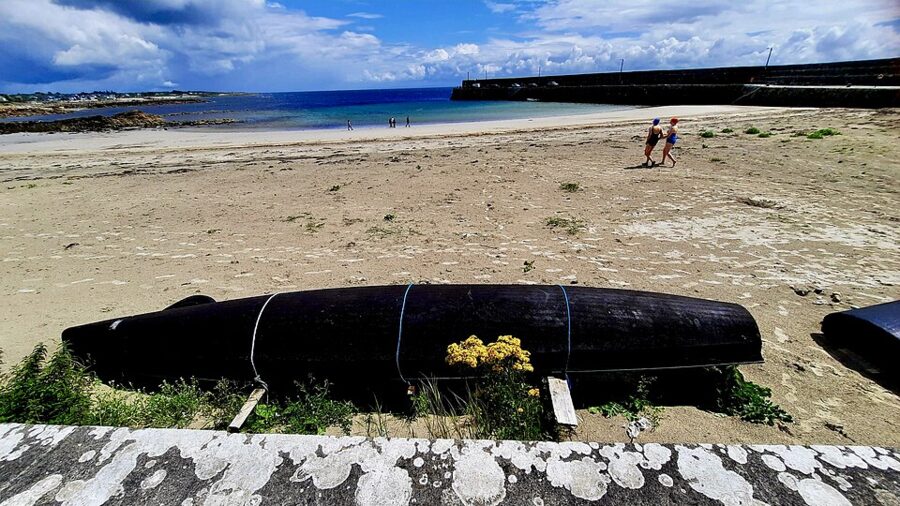
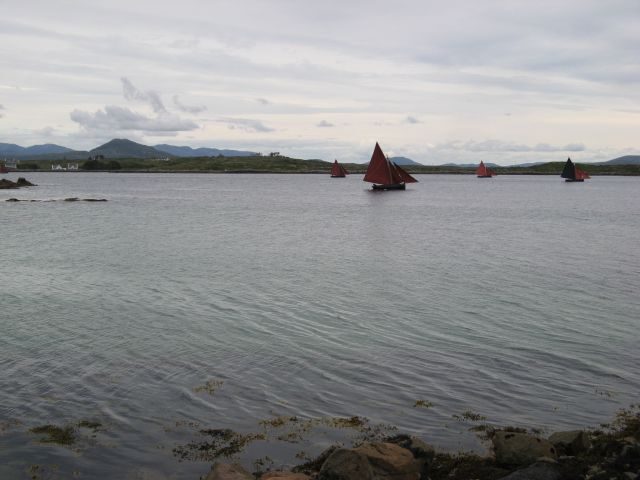
The Galway hooker is a family of boats rather than one: the bád mór, the big boat; the leathbhád, the half-decker; the smaller gleoiteog; and the open púcán. All have black-tarred hulls and tanned red-brown sails. For most of the nineteenth and twentieth centuries they carried turf from Connemara to the Aran Islands and the Clare shore, where there was little to burn.
Today they race. Through the summer the hookers and the lighter canvas currachs sail and row in a run of regattas along the coast. The 2026 currach calendar gives a fair picture of the season: Ros Muc in mid-June, Carna on 18 July, Roundstone on 25 and 26 July, Leitir Mealláin (Lettermullen) on 1 August, Leitir Móir (Lettermore) on 9 August, and the All-Ireland championship on 5 and 6 September.
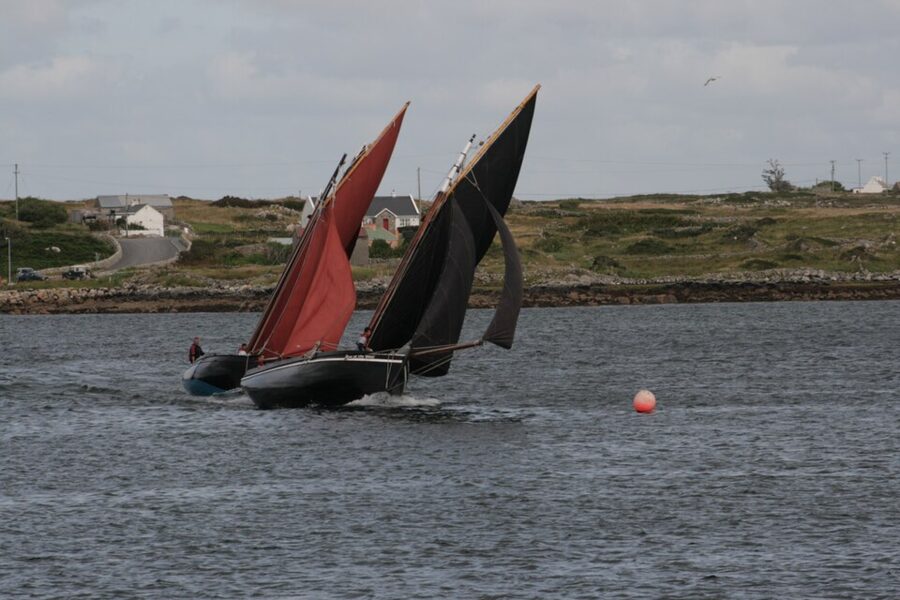

The Roundstone regatta is the easiest for a visitor to see well, because the harbour is the village and the boats race in the bay in front of it. The Leitir Móir and Leitir Mealláin regattas are in Ceantar na nOileán, the island district joined to the mainland by bridges, where Irish is the language of the quayside. Leitir means a hillside, and nearly every island there has one.
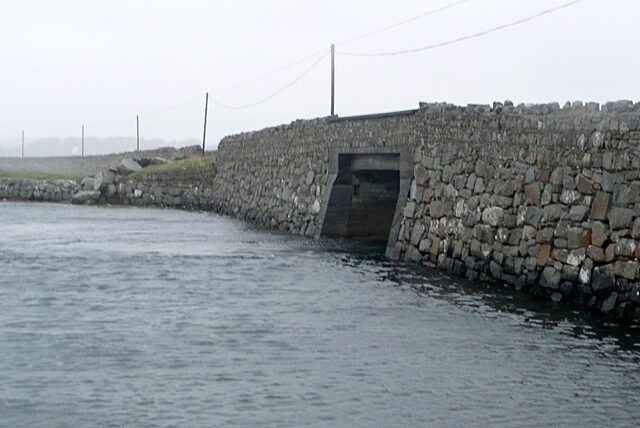

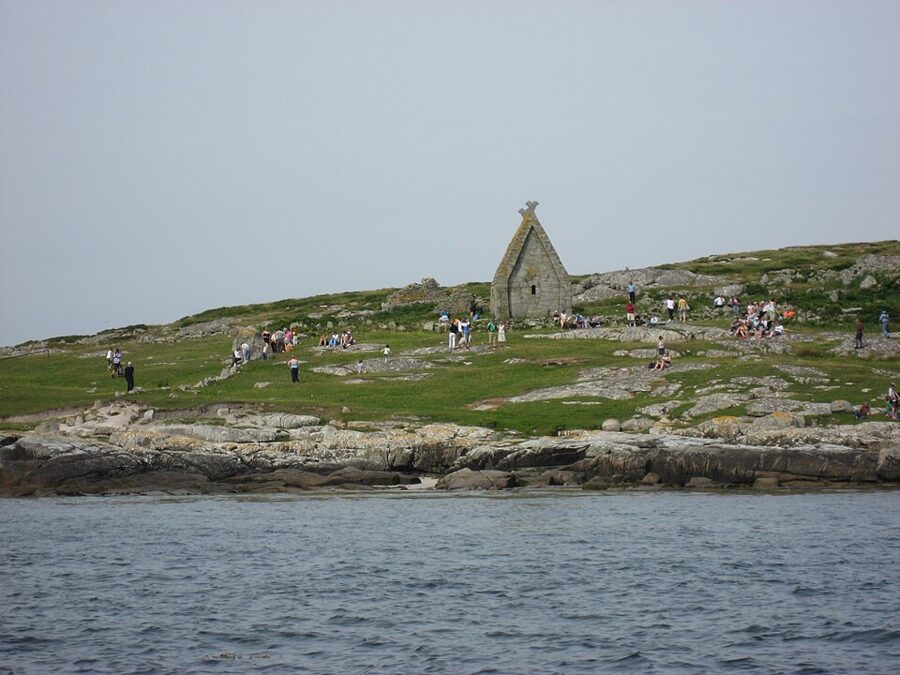
Carna has the oldest gathering of all. Every 16 July, the feast of St MacDara, boats carry pilgrims out to Oileán Mhic Dara, about 3 km offshore, to the saint’s stone oratory, one of the earliest church buildings in Ireland. Hooker crews traditionally dip their sails as they pass the island, and in 2026 Féile Mhic Dara’s races followed on the Saturday, 18 July.

Cleggan (An Cloigeann) holds its regatta inside the Festival of the Sea in early August (8 August in 2026), and Inishbofin’s currach regatta falls in August too. The best-known hooker gathering of all, Cruinniú na mBád at Kinvara, is in August on the far side of Galway Bay, well outside Connemara.

Races on the strand
Two local race meetings fall a week apart. The Errismore Races, on the Errismore peninsula by Ballyconneely (Baile Conaola), were on Sunday 26 July in 2026, starting at 13:00.
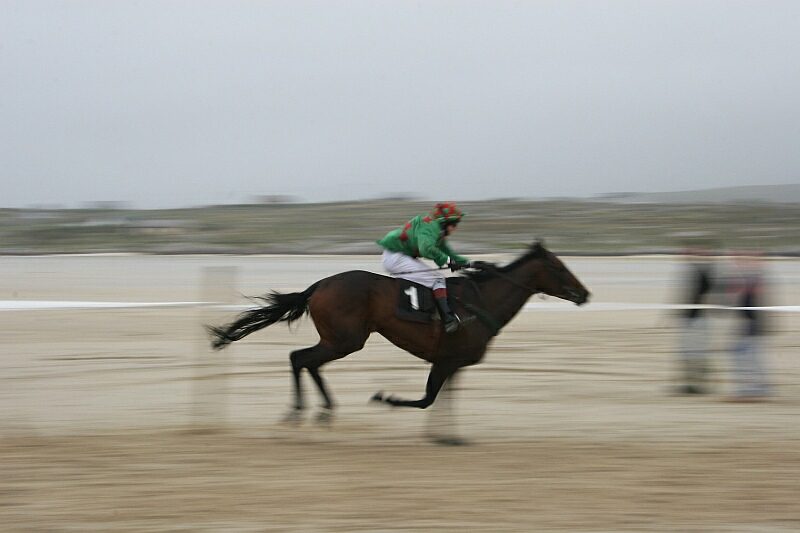
The Omey Races are the famous one. Once a year, when the tide is out, a course is marked on the open sand of Omey Strand between Claddaghduff (An Cladach Dubh) and Omey Island, and local horses and ponies race on it until the sea comes back. In 2026 the races were on Sunday 2 August from 14:00, the Sunday of the August bank holiday weekend, which would put them on 1 August in 2027. The start time moves with the tide, so check it the week before.
The races sit inside a longer community festival. The Festival of the Sea in Claddaghduff and Cleggan ran from 31 July to 10 August in 2026; its programme had evening kayaking on Omey Strand for €5, children’s shore walks, the Cleggan regatta and island trips with the archaeologist Michael Gibbons. Further south, the Cashel Together festival in An Caiseal (Cashel) filled the first week of August (3 to 9 August in 2026) with music, dancing and sport.
Music nights
From mid-July to the end of August, Roundstone’s community hall holds a traditional music night every Thursday from 20:30, with music, song and dance; in 2026 it started on 16 July. Clifden’s pubs have sessions most nights in summer, and on Inishbofin the music starts late and keeps going.
The Connemara Pony Show
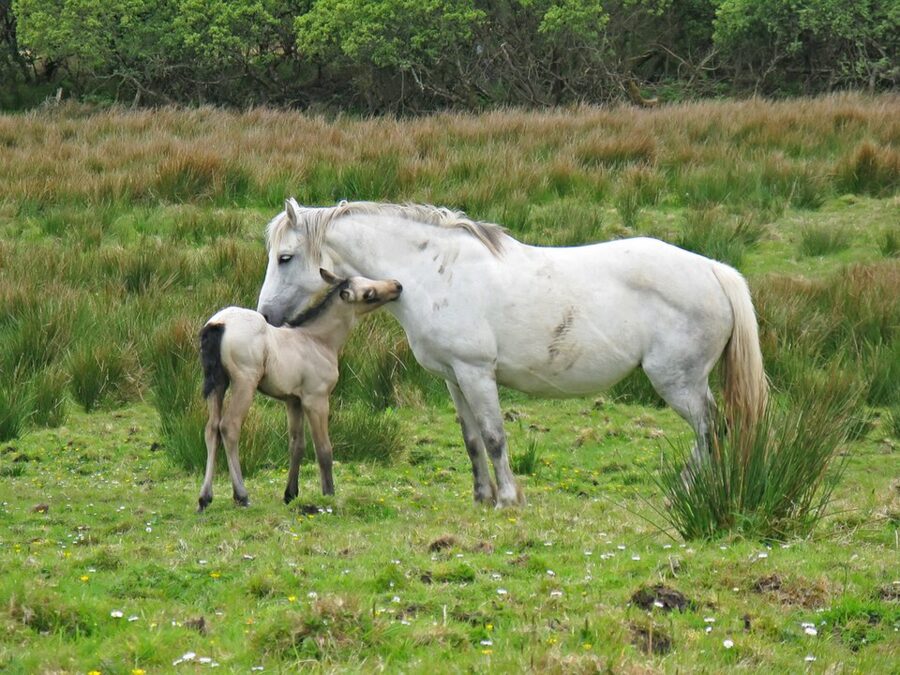
The third week of August belongs to the ponies. The Connemara Pony Breeders’ Society has held its show in Clifden since 1947; the 2026 show, the 101st, ran from 18 to 21 August, and for 2027 the breeders’ society is taking the running of it back into its own hands. Expect it in mid-August as usual, and book a bed months ahead, because show week fills the whole of north-west Connemara.

The month ends with an agricultural show on the eastern edge of Connemara. The Oughterard Show is held at Corribdale at the end of August, with livestock and horse classes, a dog show and the rest of a country fair; in 2025 it was on Sunday 31 August.
September and October: arts, trad and the turn of the bog
September is my favourite month for walking. The schools are back, the beds are cheaper, the sea is at its warmest, and the heather is still out. The days are shorter, but not short: you still have twelve hours of light at the equinox.
Festivals
The Clifden Arts Festival is the big one, ten or eleven days of readings, concerts, talks and exhibitions in the second half of September. It began in the late 1970s at the town’s community school; the 2026 festival ran from 17 to 27 September, and 2027’s will be the fiftieth, so expect a bigger programme than usual and book early.
In the Gaeltacht, Ainm Cleite, a festival of poets and writers in Irish, ran from 11 to 13 September in 2026 in Ceantar na nOileán, again opened by the President. On Inishbofin, September brings a food festival and the Set Dancing and Trad Weekend (25 to 27 September in 2026), and the island’s late-August music weekend for the singer Dessie O’Halloran is the other good reason to cross in the last weeks of summer.

Heather and rust
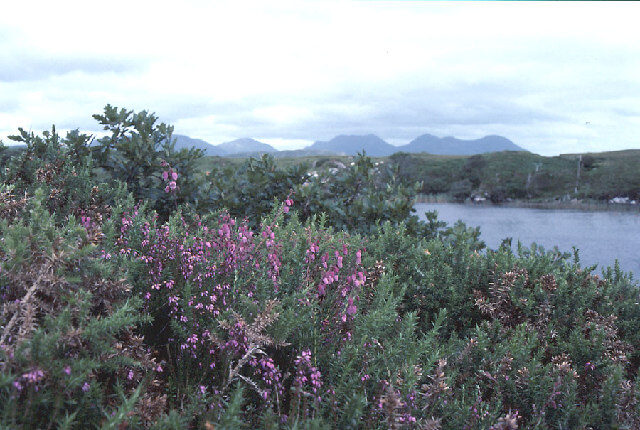
Ling heather and bell heather flower from August into September, and the purple runs right up the lower slopes of the Bens. Then, in October, the bog changes colour again. The deer grass that covers so much of it turns a deep rust orange, the moor grass goes to straw, and on a low sun after rain the whole country between Clifden and Recess glows. It is the season I would choose for photographs.
The end of the season
The fishing season on the Ballynahinch River closes on 30 September, and by mid-October most of the boats are coming in for winter. The Killary boat stops at the end of October, and Inishbofin goes onto its winter timetable after the middle of the month. The October bank holiday is the last busy weekend of the year.
Letterfrack ends the year’s festivals with Conamara Sea Week, ten days of talks, walks, music and workshops about the sea and the shore, around the October bank holiday; in 2026 it ran from 17 to 26 October, and included a mini regatta for homemade boats no more than 30 cm long on a pond in the national park. The same fortnight brings a food festival to An Spidéal, Féile Bia Chois Fharraige (23 to 26 October in 2026), and windsurfers to Gurteen Bay beside Roundstone for a slalom event (24 and 25 October in 2026).
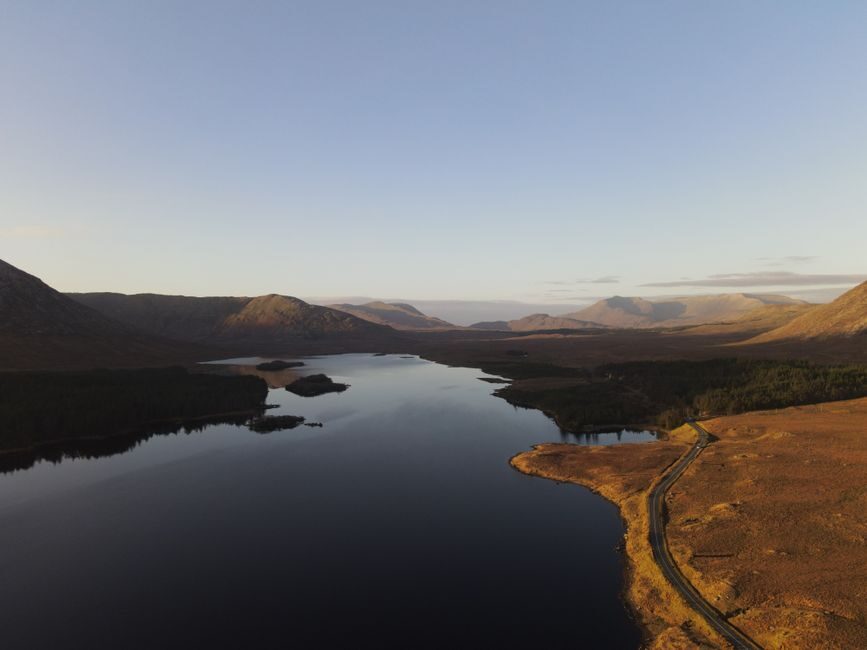
November and December: Christmas and the dark
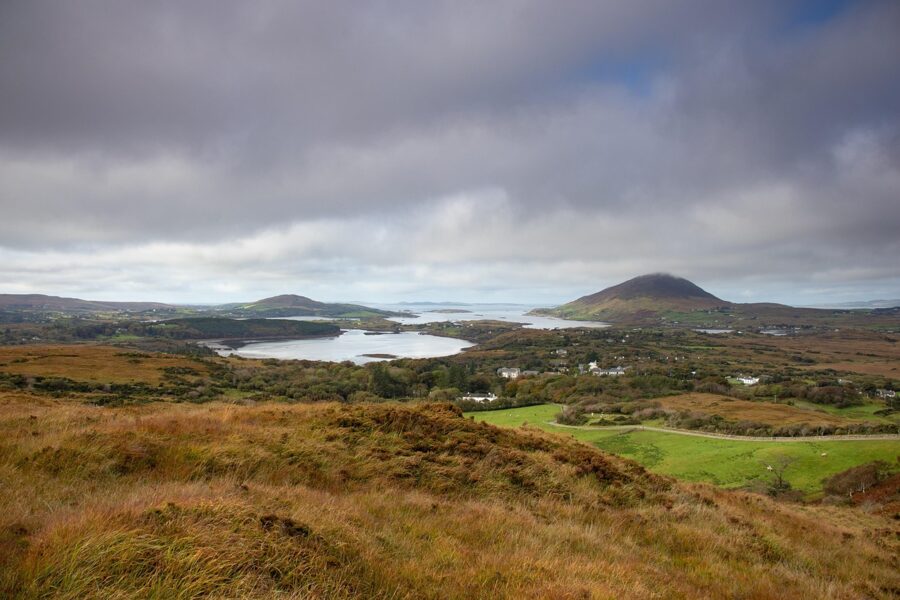
November is the quietest month, wet and short of light, with the Atlantic at its loudest. It is the month I would least recommend for a first visit. In mid-November the Irish Red Cross branch at Leenane holds its Leenane 5 Mile Run, Jog and Walk along Killary Harbour for the local first-responder group (15 November in 2026).
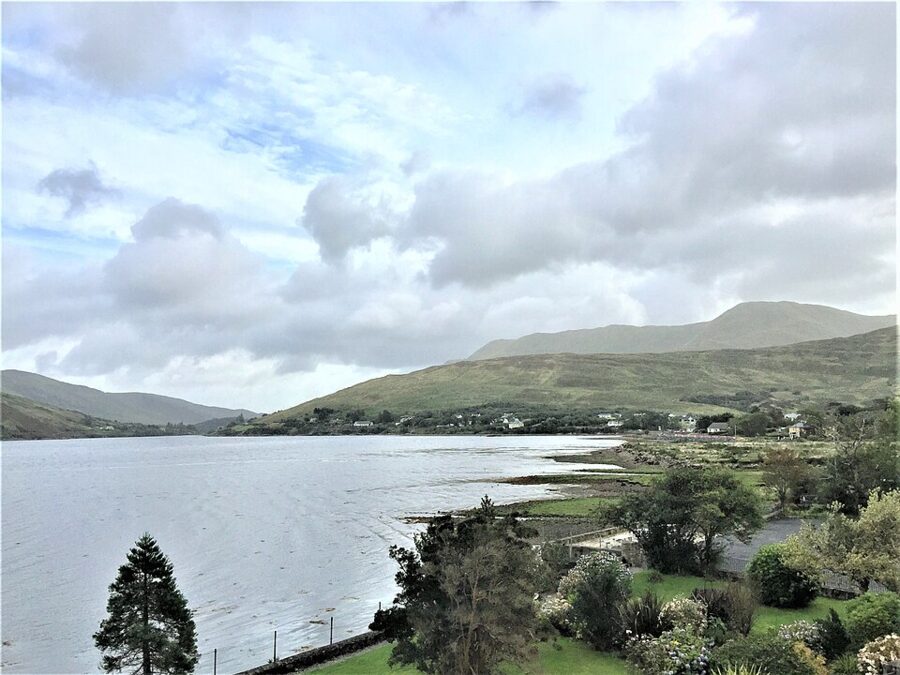

Christmas in Clifden takes over three weekends from late November to mid-December: in 2026, 28 and 29 November, 5 and 6 December, and 11 to 13 December. Expect a Christmas market at the Station House Theatre, children’s workshops, carols by the choir Cantairí Chonamara and a story time in Irish at the library; the programme for the final weekend gives the flavour. It is aimed at the town and the parishes round it, which is exactly why it is worth seeing.
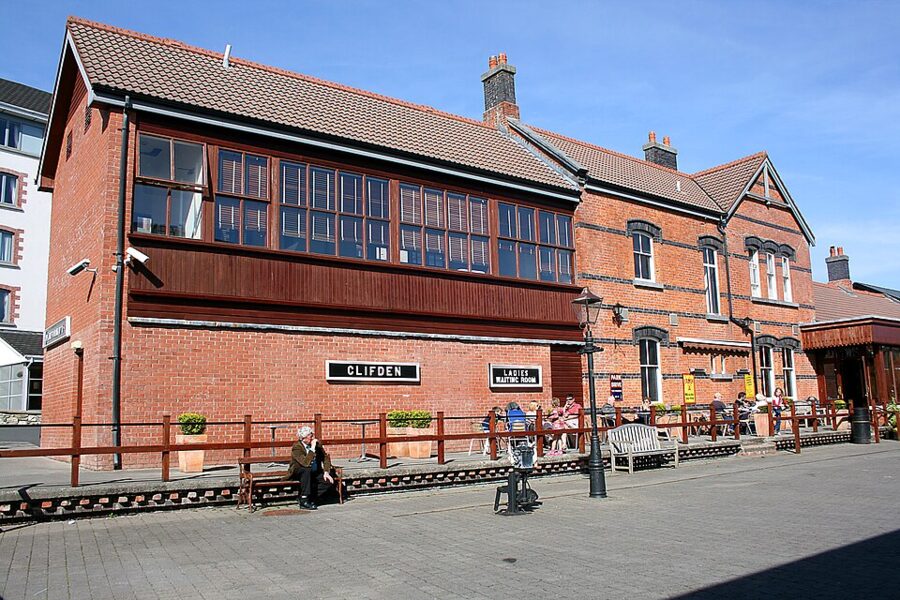

The winter solstice is marked at Brigit’s Garden with an evening of candle-lighting and reflection (20 December in 2026). Over Christmas, sea swimmers in County Galway turn out for charity swims, the best known on Christmas morning at Blackrock in Salthill, just outside Connemara.
What stays open
Plan winter trips around what you know is open. The national park trails are open every day, though the visitor centre also shuts on Christmas Day and St Stephen’s Day. Aran Island Ferries sail all year from Ros an Mhíl and the Inishbofin ferry runs on its winter timetable. Several hotels close in January, the Leenane Hotel among them from 5 January 2027, so ring before you book a winter night anywhere small.
On a clear, cold winter day the Twelve Bens (Na Beanna Beola) can be as fine as at any time of year. Go with a map and a head torch, and plan to be down by 15:30.
Things to do, season by season
Hillwalking
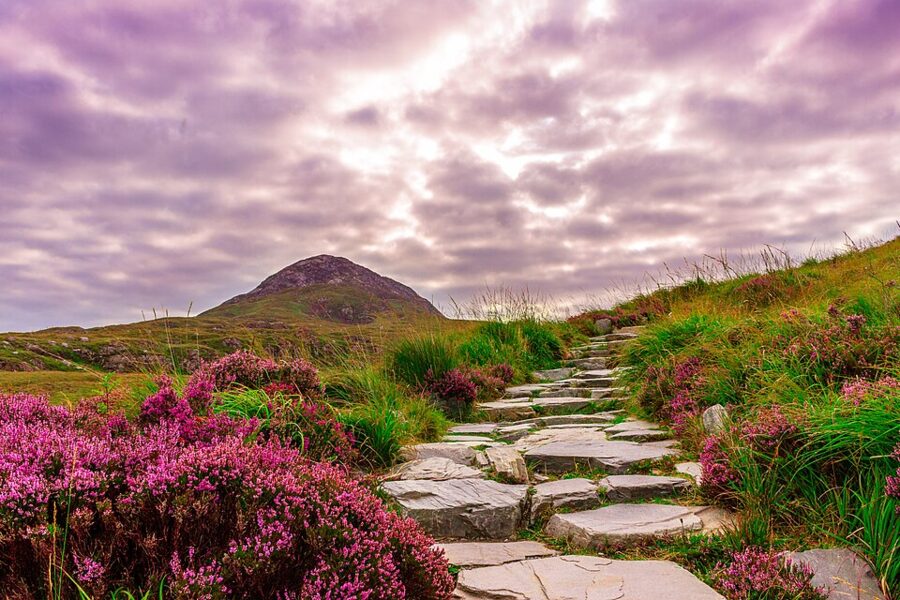
The easy introduction is Diamond Hill (Binn Ghuaire, 442 m) in the national park, reached from the visitor centre at Letterfrack. Four marked trails start there, the shortest a 0.5 km woodland loop and the longest the red route over the summit, with views to the Twelve Bens, Kylemore Abbey and the islands; allow about three hours for the summit. Kylemore Abbey is a short drive away, and a morning on Diamond Hill with an afternoon at the abbey’s walled garden makes a full day.
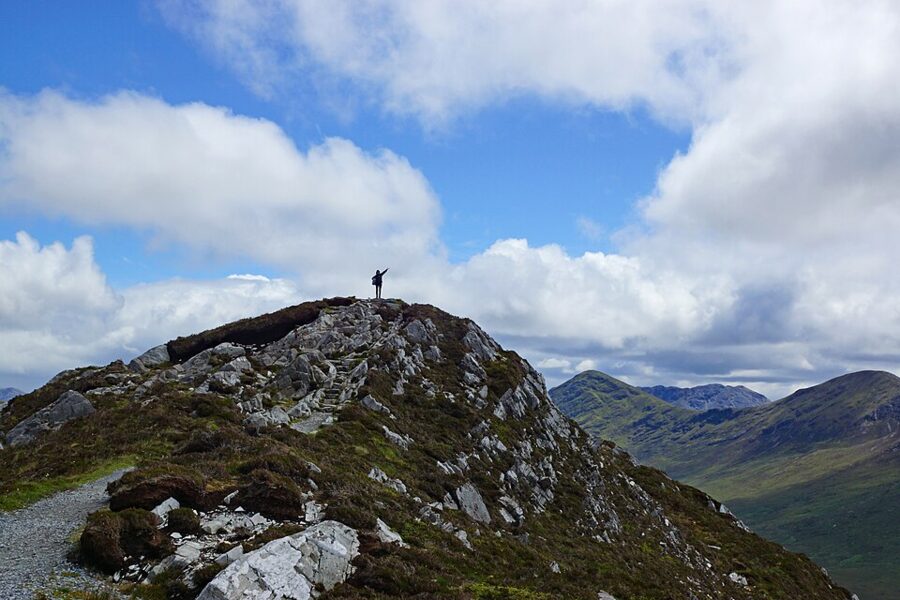

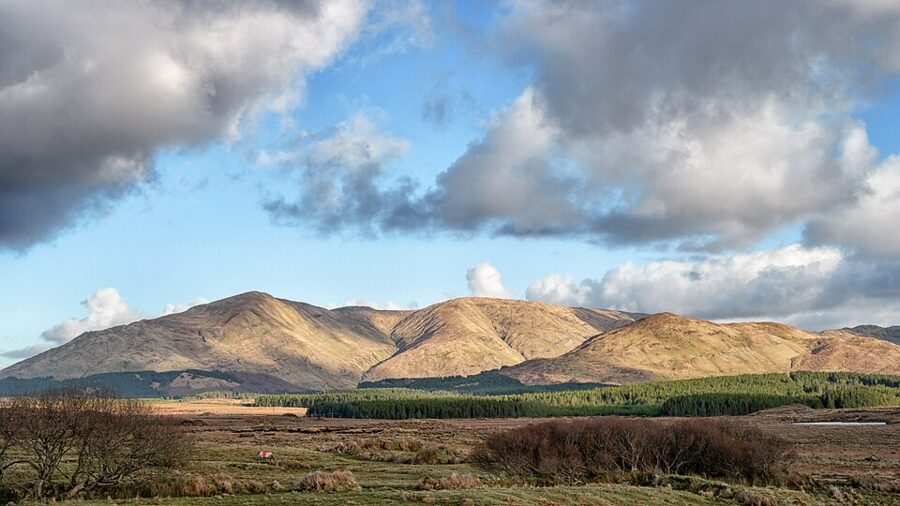
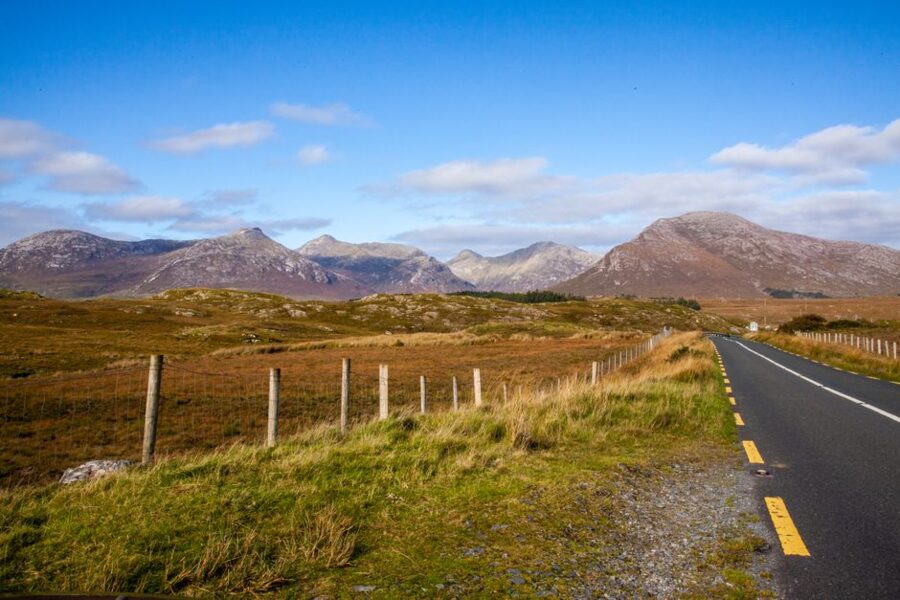
The Twelve Bens are the serious hills: steep, rocky and pathless above the bog, with the Glencoaghan horseshoe the classic round. Benbaun, the highest, is given as 725 m by the national park and nearer 730 m on most maps. The Maumturks (Sléibhte Mhám Toirc), the long ridge east of the Inagh Valley, reach 702 m and are walked end to end once a year in a single long day by the University of Galway club’s Maamturks Challenge. Both ranges are best from April to June and in September.
Beaches and sea swimming
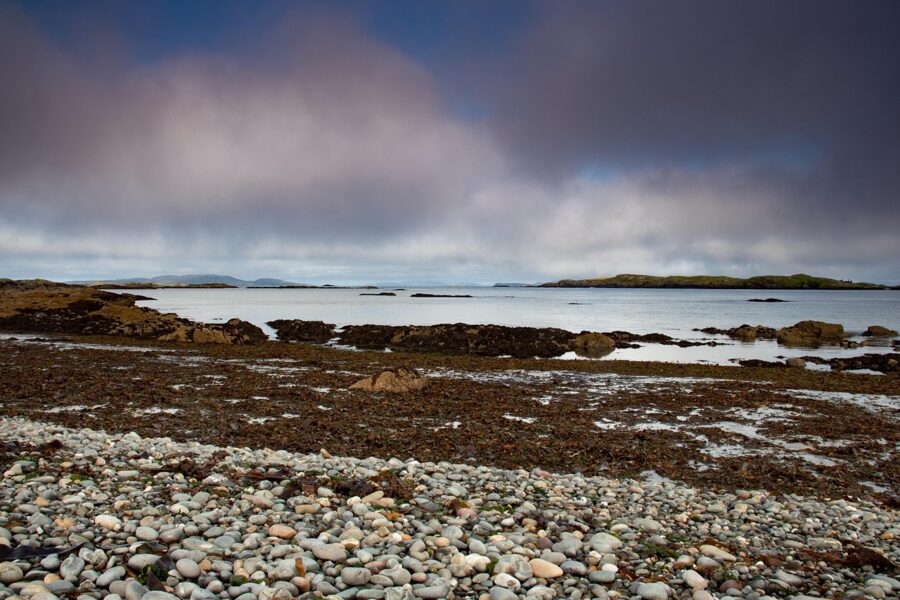
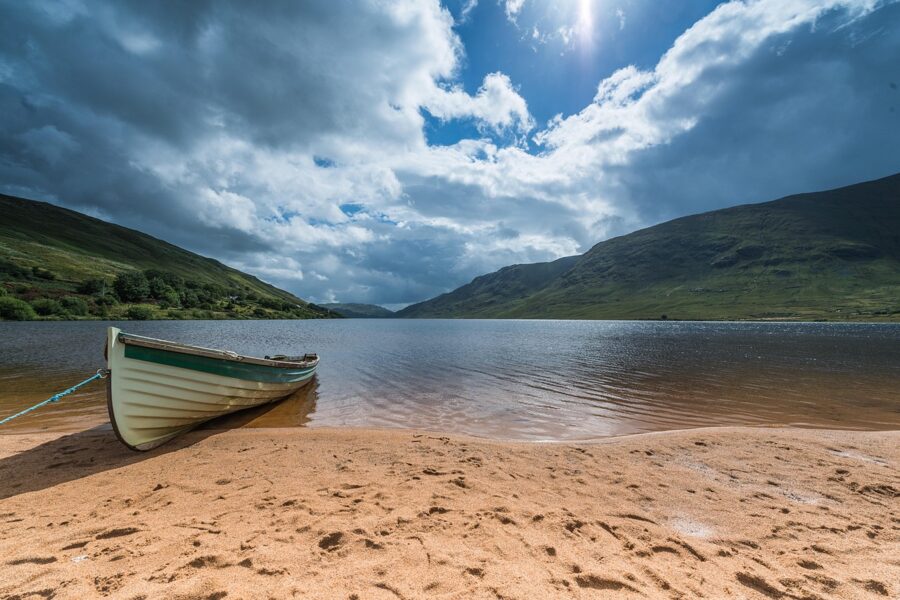
The swimming season runs from June to September, and the sea is warmest in late August and September. Assume no lifeguard anywhere, swim within your depth and never alone. Dog’s Bay and Gurteen, the two white-sand bays side by side south of Roundstone, are the classic pair; Eyrephort, off the end of the Sky Road, is small and sheltered.
On the Ballyconneely road, Mannin Bay and the Coral Strand have water clear enough for snorkelling. The strand is made not of sand but of fragments of a chalky seaweed called maërl.
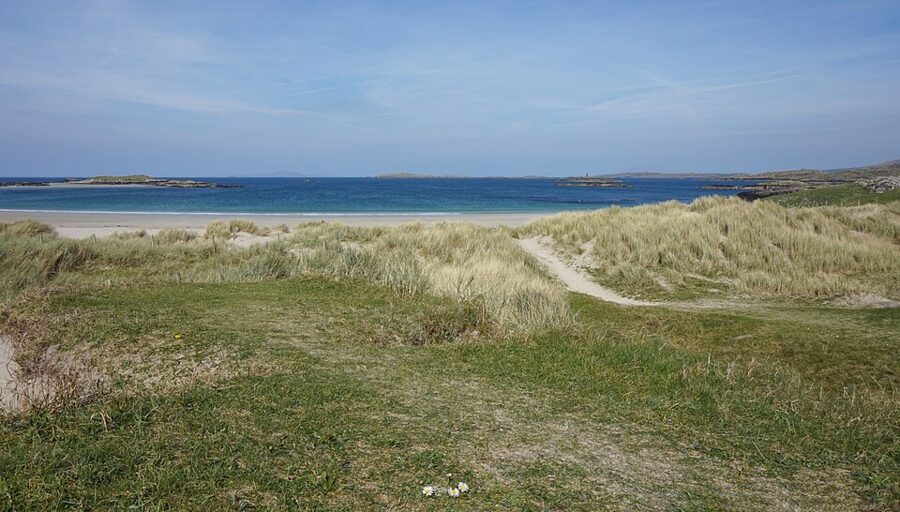

Glassilaun, north of Letterfrack, is the most beautiful of the lot. On a westerly, pick a bay that faces east or south; on an easterly, the west-facing beaches are flat calm.
Cycling
The Sky Road, the loop west of Clifden with a steep climb out of town, is the short ride everyone does. The Bog Road, signed for Cashel off the Ballyconneely road south of Clifden, is a longer and flatter ride across open blanket bog and hundreds of small lakes towards Cashel and the Roundstone road. Both are quietest in May, June and September.
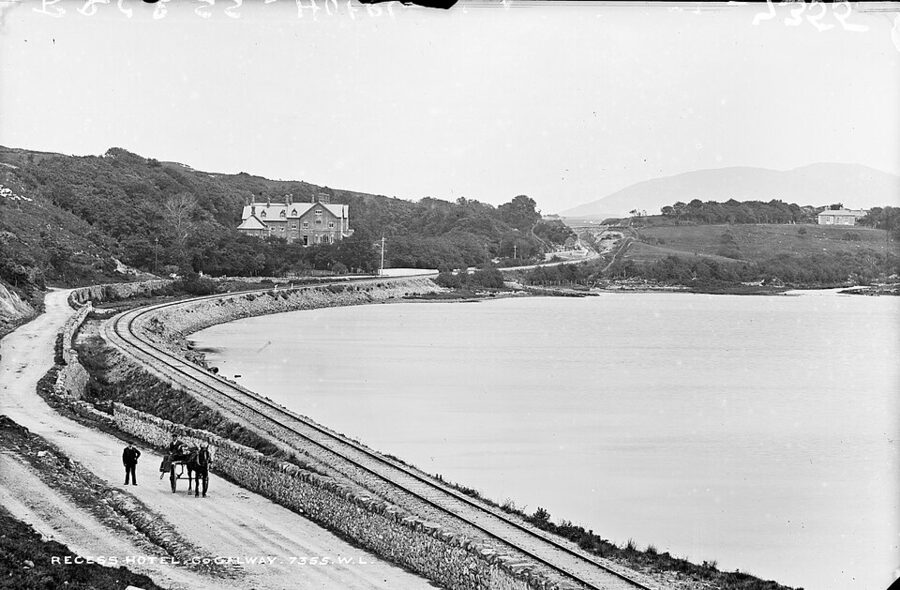
The Connemara Greenway is the long-term project. The plan is a walking and cycling route along the old Midland Great Western railway from Galway to Clifden, which opened in 1895 and closed in 1935. Galway County Council’s Clifden to Oughterard scheme was given planning consent in 2013 and was still at the compulsory purchase stage for later sections in 2025, but some stretches in the west are already open: Ballynahinch Castle lends bikes to guests for the section that runs past its gate.
Angling
Connemara is salmon and sea trout country. The Ballynahinch River, running down from its chain of lakes to Bertraghboy Bay, is fly-only and catch-and-release, and the fishery’s season runs from 1 March to 30 September. The main run of grilse, salmon back after a single winter at sea, comes in early June; the best of the sea trout is from early June to mid-July. Experienced anglers can fish a beat without a guide from €140 a day, licence and flies included, and the casting piers along the river were built for the cricketer Ranji, the Maharaja Jam Sahib of Nawanagar, who owned the fishery in the 1920s.
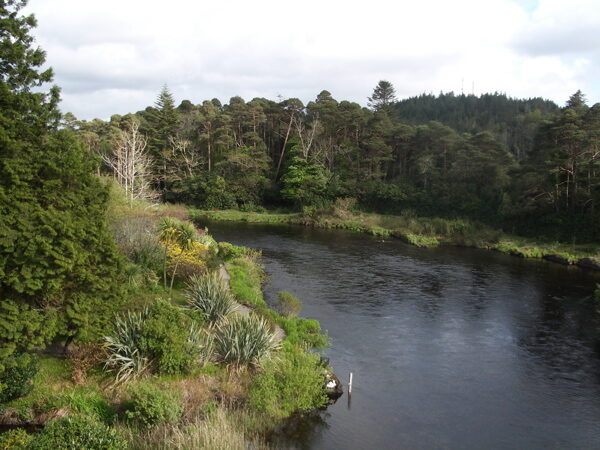

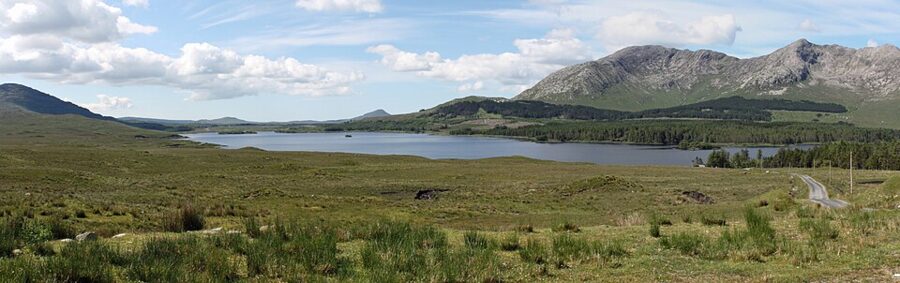
Brown trout fishing on the lakes runs longer, and Lough Inagh and the hundreds of small bog lakes all hold fish. Sea angling off the rocks, for pollack and mackerel in late summer, needs no licence, only care on wet weed and an eye on the swell.

Horse riding and the ponies
The Connemara pony is the native breed, and the show in August is the place to see the best of them. The rest of the year, the national park’s pony paddock beside the Sruffaunboy trail is the easiest place to meet a few. Riding centres in north-west Connemara run beach and bog treks in season; ring to check that a centre is open for the year before you plan a day around it.
Kayaking and the water
Sea kayaking is the best way to see the coast. Real Adventures runs guided trips of two and a half to three hours on Mannin Bay, with all the gear, from €65 for an adult and €55 for a child. On Killary Harbour, the Killary Adventure Company runs guided paddles as well as climbing and hillwalking from its centre west of Leenane. For divers, the water off the islands is clear and cold; bring your own qualifications and arrange boat cover through a club or a licensed charter.
Golf
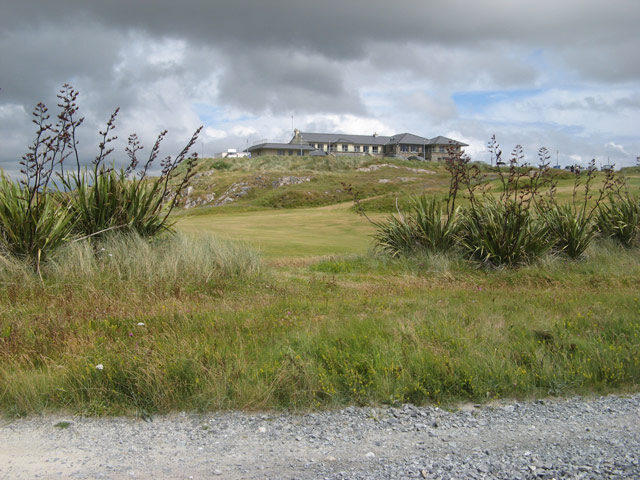
Connemara Golf Links lies on the shore at Ballyconneely, near Mannin Bay and the bog at Derrigimlagh. Eddie Hackett designed the course, it opened in 1973, and a third nine was added in 2000. Its green fees are €160 from November to March and €220 from April to October, with a nine-hole course at €90 in the summer months.

Islands by ferry
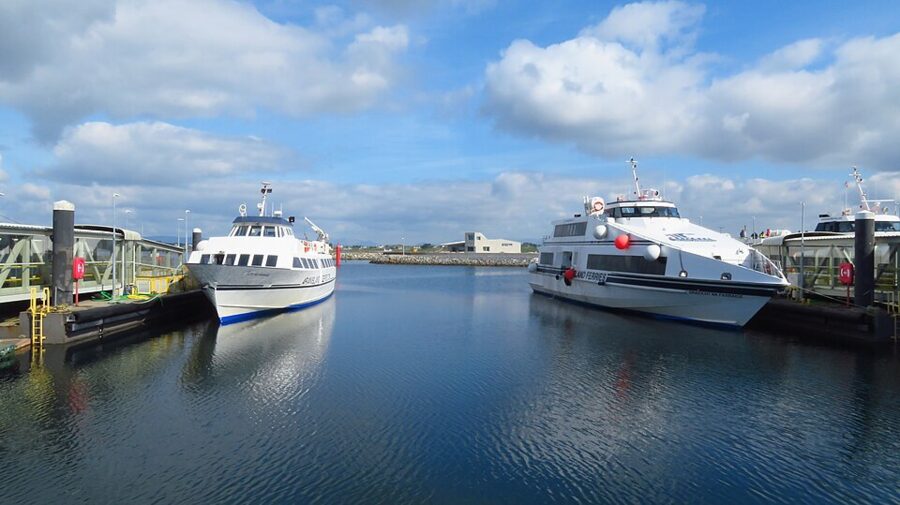
Inishbofin is half an hour from Cleggan pier by ferry, and worth at least one night. The Aran Islands are reached from Ros an Mhíl, 37 km west of Galway: Aran Island Ferries sail to all three islands all year, taking about 40 minutes to Inis Mór, with parking at the pier at €8 for 24 hours. Omey needs no boat at all, only a tide table and a walk across the strand.

Planning a visit
Book early for the weekends that fill: the May bank holiday, pony show week in August, the August bank holiday and the Clifden Arts Festival. Inishbofin has no central booking at all, so contact each place on the island directly.
Without a car, Citylink’s route 923 runs from Galway coach station to Clifden in about 1 hour 30 minutes, with some journeys continuing to Cleggan pier and Letterfrack, and Bus Éireann’s route 419 runs via Oughterard. On event days the buses fill and the roads slow down, so travel early. For Omey, look up the tide before anything else; for the regattas, ask in the nearest pub when the boats go out.
Bring waterproofs whatever the month, and a head torch from October to March. Then look again at those two numbers from the start: sunset at 16:22 in December and 22:12 in June. Everything else in the year fits inside them, the hookers out in the bays in July and the Christmas market in Clifden’s old railway goods shed with its lights on by four.